Note: Additional information will require amendments to this blog. A member at the 18th Battalion Facebook Group found more information.
The Players
- Private, later Sergeant Alfred Brittle
- Eliza Brittles, wife of Sergeant Brittle
- Private Charles Brookman
- Minnie “Brookman” Clark, wife of Private Brookman and William Clark
- William Clark, a rigger at a munition plant in Merseyside, and his two children
- Constable Spowage, Criminal Investigation Division (C.I.D.), Prescot Division, Merseyside, Liverpool, England
- Colonel Ward, Paymaster Corp, C.E.F.[i]
The Play
The inter-personal relationships of the soldiers of the C.E.F. and the 18th Battalion, in particular, can come into sharp relieve and alive with the inclusion of some unusual documents in the soldier’ service records.
In the case of Private Brookman, reg. no. 54306 there is an interesting document written by Constable Spowage of the Liverpool C.I.D. relating the court case of a Minnie Clark charged and convicted of bigamy. The Offences Against the Person Act 1861[ii] specifically outlines the felony of bigamy and defines it as:
“Whosoever, being married, shall marry any other Person during the Life of the former Husband or Wife, whether the Second Marriage shall have taken place in England or Ireland or elsewhere, shall be guilty of Felony…”
The penalties for such a crime were severe. Penal servitude for a minimum of 3 years and a maximum of 7 or up to two years of hard labour. The differentiation between the two punishments was the type of prison facility the convicted would be assigned to. Penal servitude was designed to replace the option of transportation to Australia[iii] used before the adoption of the Penal Servitude Acts of 1853 and 1857. It was a severe punishment.
The bigamy case of Minnie “Brookman” Clark is a reminder that life, in all its forms and expressions, maintains a continuity, even in war.
From the service records of Private Brookman and his acquaintance Sergeant Alfred Brittles, reg. no. 53416 one can collect an impression of what transpired. The motivation and circumstances of this bigamy will never be fully known but one can surmise and theorize the instigation of bigamy, its eventual discovery and actions resulting in a conviction, and a conclusion as far as one of the parties is concerned.
The connection between Brookman and Brittles is unknown. On their attestation papers Brittles gives his trade/calling as a painter and Brittles identifies himself as a sailor. The former was born in Wolverhampton, in the West Midlands and the latter in Liverpool, England which, being a major port, may explain his selection of trade as a sailor.
At some time before World War 1 starts Alfred Brittle emigrates to Canada and his attestation papers show him married to a woman named Eliza. They have settled, as of the date of his attestation, in October 1914 at 734 Nelson Street in Woodstock, Ontario. Alfred Brittle attests in Woodstock and is assigned the rank of sergeant and moves with the 18th Battalion to London for training.

In England, meanwhile, Charles Brookman marries Minnie Clark at the Brownlow Hill Registry Office, Liverpool on January 12, 1915 and subsequently they emigrate to Canada and take up residence at the Brittle’s home in Woodstock. It is unknown the specific circumstances of the relationship between Brittles and Brookman but it was such that they shared the same residence; the men joined the same battalion; and later, Mrs. Brittles was to become instrumental in committing fraud. The evidence indicates some connection between these men existed before the war began and that they may have communicated in some form to organize the emigration of the newly married Brookmans to Canada.
Brookman’s trade as a sailor would necessarily offer him the opportunity to organize their travel to Canada during the conflict in order to facilitate their movements in order to be together with the Brittles in Canada. Minnie Clark had a family, a husband and two children, and moving to Canada would effectively allow them the distance geographically from her existing family and the authorities so they could be together as a married couple with little prospect of their illegal marriage being discovered.
Curiously, the Brookman’s return to England after Charles Brookman enlists. What does not make sense and is one curious aspect of this case is why, after coming all the way to Canada to effect an escape did Brookman enlist in the Canadian Expeditionary Forces? There was no compelling reason to volunteer and he must have known that joining the 18th Battalion with Sergeant Brittles would guarantee his return to England and then to the Continent for service in the trenches. The 18th Battalion was clearly a 2nd Contingent formation and the intent of most of the volunteers was to be an active combat soldier. Certainly joining an infantry battalion like the 18th assured this for Brittle and Brookman. Further to that, his “wife” emigrates to Canada with him and then returns to England and takes up residence in the Liverpool area, specifically the area known now as Merseyside. This locale is where they were married and later, where the Assigned Pay of Private Brookman in directed to sometime after September 1915. In addition, it is part of the same area her first husband is residing.
The Brittles, specifically Mrs. Brittles, where involved in a conspiracy to defraud the Canadian Military as the assigned pay for Mrs. Minnie “Brookman” Clark would be directed to the address in Woodstock and Mrs. Brittles would have been assigned with the task of cashing the payments in Canada in Canadian dollars and converting it to English currency and forwarding the money to England.
The investigation of this crime brings to light and the report by Constable Spowage to The Inspector outlines some of the key facts:
- Minnie Clark is convicted to 6 months’ hard labour[iv] for bigamy in the illegal marriage to Private Brookman.
- That they obtained 45 pounds, 16 shillings, and 8 pence in separation allowance. This is approximately $83 Canadian dollars. Using only the British pound the equivalent value in today’s money is approximately 3500 British pounds.
- The police report indicates that Brookman and Clark were living together and that she returned to Liverpool about September 1915 and the allowance was drawn in Canada and forwarded to her.
- The report indicates that Brookman and Clark were arrested together. There is no indication in the service record of Private Brookman of this arrest. Brookman’s service record specifically outlines that on January 28, 1916 he was granted 8 days leave to England and he returned on February 4, 1916. After that he serves with the 18th Battalion with not gaps in his service record to explain the statement in the report that he was arrested. It is possible the arrest occurred during his leave in January/February 1916 but no indications of disciplinary action seem to have been taken by the Canadian Authorities.
- Constable Spowage indicates no action will be taken towards Sergeant Brittles as he was “instrumental in assisting Minnie Clark and Brookman to obtain this money by means of fraud…” and suggests that the military authorities “will now deal with him.”
- No indication in Sergeant Brittles’s service record is indicative of any action against him and is, in the end, moot as he is dies of a gunshot wound to the head on September 16, 1916 at the Somme.
The arrest of Private Brookman and the subsequent charge of bigamy against him is problematic as it appears that he was never married and under the law he is not liable to a charge of bigamy, even if he was aware the Minnie Clark was married at the time of their marriage. It is possible that he was charged with another crime at the time of arrest of Minnie Clark but is service record nor the report by Constable Spowage reveals if this actually transpired.
Life and war continues after the conviction of Minnie Clark and as Sergeant Brittle dies of his wounds on September 16, 1916 at the Somme it appears that no action was taken against him or his wife.
Private Brookman was to be transferred to other duties as his eyesight was “defective” and he was to marry again to a Louisa Brookman. He is granted permission to marry May 7, 1919 and a record of assigned pay to a Louisa Brookman begins August 6, 1919. Her residence is recorded as 12 Holt Road, Kensington (Merseyside), Liverpool. They would return to Canada, settling in the Vancouver, British Columbia area.
Mrs. Brittle, now a widow, is recorded to have remarried at some time after Sergeant Brittles death. She is recorded as becoming Mrs. Eliza Wehterall of 42 Muriel Avenue, Toronto, Ontario.
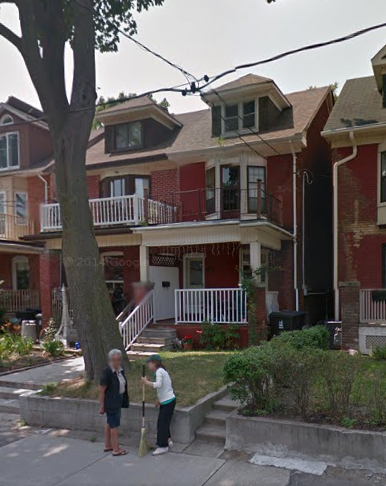
The social and economic harm of this episode in the broad scope of a national history is small. The personal impact to the people in this story cannot be fully measured. These individual acts represent the human experience with its expression of morality and love. The motivations for Charles and Minnie to marry knowing that they were, effectively forever, fugitives from the law and their subsequent decision to move to Canada is understandable. The motivation to join the army, return to England and fight in the trenches while having your “wife” brave another voyage across the ocean at some risk to herself and establish herself in the environs from which she originally was from is confusing and inconsistent. They, in effect, were returning to the scene of the crime with the increased chance of discovery being a specter over them as they lived their lives separated by war.
Brookman and Clark where able to convince two additional actors in the Brittles in colluding in their act of financial fraud and that gives some indication of the strength of relationship between Alfred Brittles and Charles Brookman. It was strong enough to sustain and motivate the action of Eliza Brittles as she forwarded the payments to Minnie “Brookman” Clark. Did Brittles and Brookman work out some form of sharing in the proceeds of their fraud. Constable Spowage’s report alludes to this but is not specific in any detail.
In the end, Sergeant Brookman is killed and the other actors pass into history and obscurity. His wife Eliza remarries and moves to Toronto. Charles Brookman survives the war and during is service on the Continent and in England he meets and marries Louis and they return to Canada, not to Ontario, but to British Columbia. Minnie Clark, the focal point, is convicted of bigamy appears to served her sentence and we do not know if she reconciles with William Clark and their two children. Constable Spowage of the C.I.D., his duty done, passes into obscurity as well.
One document allows us to look into the mosaic of life a hundred years ago.
Timeline
| Event | Date | Location | Event |
| 1 | Unknown | Woodstock, Ontario | Alfred Brittle emigrates to Canada and settles eventually in Woodstock. |
| 2 | 24/10/1914 | Woodstock, Ontario | Sergeant Alfred Brittle enlists with the 18th Battalion. |
| 3 | 12/01/1915 | Brownlow Hill Registry Office, Liverpool | Charles Brookman marries Minnie Clark in a marriage that effected a bigamy. |
| 4 | Jan/Feb 1915 | 734 Nelson Street Woodstock, Ont., Can. | The Brookmans move to Canada and live with the Brittles. Most likely with Eliza as Alfred is with the 18th Bn. in London, Ontario |
| 5 | 27/03/1915 | London, Ontario | Private Brookman enlists with the 18th just before it goes overseas. |
| 6 | 01/04/1915 | London, Ontario | Brookman assigns $20 pay to his “wife” living at Woodstock address. |
| 7 | 18/04/1915 | In transit to England | Both soldiers sail with the 18th to Liverpool, England. |
| 8 | 01/07/1915 | West Sandling Camp, England | The rank of Sergeant is confirmed for Sergeant Brookman |
| 9 | 01/09/1915 | Liverpool, England | Minnie “Brookman” Clark returns to England and settles in the Liverpool area. |
| 10 | Unknown | N/A | Assigned pay address for Minnie “Brookman” changed to 33 Gilroy Road, Kensington, Liverpool, England. |
| 11 | 23/11/1915 | Near or about Vierstraat, Belgium | Segeant Brittle completes will assigning all effects and money to his wife, Eliza Brittle. |
| 12 | 20/06/1916 | Liverpool Assizes | Clark and Brookman convicted of bigamy and sentenced to 6 months hard labour (H.L.). |
| 13 | 22/06/1916 | Probably Liverpool | Letter from Constable Spowage, Criminal Investigation Division to The Inspector C.I.D. regarding bigmany case of Clark/Brookman. |
| 14 | 25/08/1916 | N/A | Assigned by to Minnie “Brookman” Clark suspended per investigation by Colonel Ward. |
| 15 | 16/09/1916 | The Somme | Sergeant Brittle dies of a gunshot wound to the head at No. 38 Casualty Clearing Station. |
| 16 | 12/06/1919 | N/A | War Service Gratuity assigned to Louisa Brookman, General Post Office, Vancouver, British Columbia. |
| 17 | 07/05/1919 | N/A | Granted permission to marry. |
| 18 | 06/08/1919 | Liverpool, England | Assigned pay now for Pte. Brookman now assigned to Mrs. Loiusa Brookman, 12 Holt Road, Kensington, Liverpool. This is only 0.3 miles from the previous address. |
| 19 | 01/08/1919 | Liverpool, England | Pte. Brookman embarks on S.S. Lapland for Halifax, Nova Scotia. |
| 20 | 09/08/1919 | Halifax, Nova Scotia | Pte. Brookman debarks and arrives in Canada. |
| 21 | 18/08/1919 | Halifax, Nova Scotia | Private Brookman discharged from C.E.F. Category B II. |

The Report
Criminal Investigation Department Report
22.6.16
Prescot Street.
Cons: Spowage. (C.I.D).
The Inspector (C.I.D).
Minnie Clark – convicted – Bigamous marriage with Private Brockman – Canadian Expeditionary Forces
I beg to report that the Liverpool Assizes on the 20th instant, before Mr. Justice Low, Minnie Clark & Brookman was found guilty and sentenced to 6 months H.L. [Hard Labour] for bigamy. Prisoner is the wife of William Clark, a rigger at present working on munitions at the factory in Litherland. He lives at 13 Knowsley Road, Bootle with his two children. The prisoner (Clark’s legal wife) bigamously married Charles Brookman, No. 54306, 18th Batt., D. Coy. 2nd Canadian Division, 4th Brigade on the 12th January, 1915 at the Brownlow Hill Registry Office in this City and he is now with his regiment in France. The prisoner Minnie Clark & Brookman obtained from the Canadian Government the sum of 45-16-8 as separation allowance und the pretense that she was Private Brookman’s lawful wife. The circumstances were fully reported in case 106159.A.C. It was brought to our notice by the Chief Pay-Master Canadian Expeditionary Force, Westminster House, 7 Millbank, London that the application for this allowance was made at Woodstock, Ontario, Canada where Private Brookman and the prisoner were living together at the time that Brookman joined the Canadian Expeditionary Force. The prisoner Minnie Clark & Brookman drew some of the money in Canada. She returned to Liverpool about September, 1915 and after that the allowance was still drawn in Canada and forwarded to her in Liverpool. Our suspicions are that the money was drawn by Mrs. Brittle with whom the prisoner lodged and her present address is 734, Nelson Street, Woodstock, Ontario, Canada. Mrs. Brittle is said to be the wife of Sergeant Brittle, whose official No. is not known, but he [is] said to be attached to the same regiment as Brookman.
With the approval of the Chief Pay-Master, it was decided to mention to the Judge at the Assizes the fact that the prisoner Minnie Clark & Brookman had obtained 45-16-8 by means of fraud from the Canadian Government and to ask his lordship to take the facts into consideration be before he sentenced Minnie Clark for Bigamy upon the distinct understanding that so far as the Military and Police authorities were concerned, no further action would be taken against the prisoner. The facts of the fraud were mentioned to the Judge and with the prisoner’s consent he (the Judge) took them into consideration before he passed sentence upon the charged of bigamy. When Minnie Clark and Brookman was arrested, the stated that Private Brookman knew that she was a married woman when he went through the form of marriage with her. She also mentioned this fact to the Judge when he asked her if she had anything to say. It is not intended to take proceedings against Private Brookman for aiding and abetting Minnie Clark & Brookman to commit the offence of bigamy. It is obvious that he was instrumental in assisting Minnie Clark & Brookman to obtain this money by means of fraud from the Canadian Government and probably the military authorities will deal with him.
The Chief Pay-Master Canadian Expeditionary Force will be informed of this case.”
End Notes
[i] Colonel Ward in mentioned in Brookman’s service record specifically on the documents recording the Assigned Pay to Mrs. Minnie “Brookman” Clark.
[ii] See Offences Against the Person Act 1861 as originally enacted
[iii] Convicts in Australia via Wikipedia
Discover more from History of the 18th Battalion CEF, "The Fighting Eighteenth"
Subscribe to get the latest posts sent to your email.
 History of the 18th Battalion CEF, "The Fighting Eighteenth"
Leave a comment