Source: Sarnia War Remembrance Memory Project
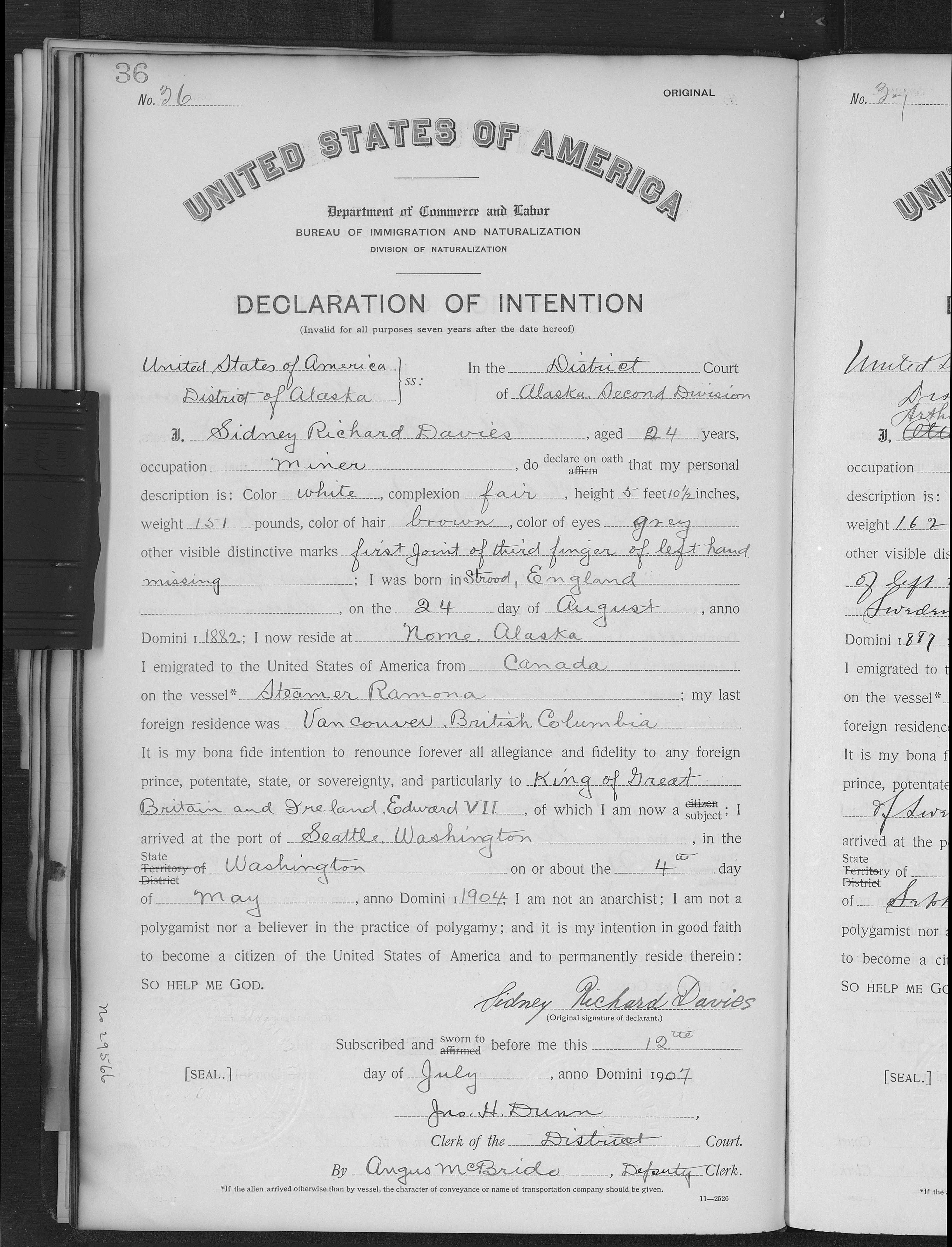
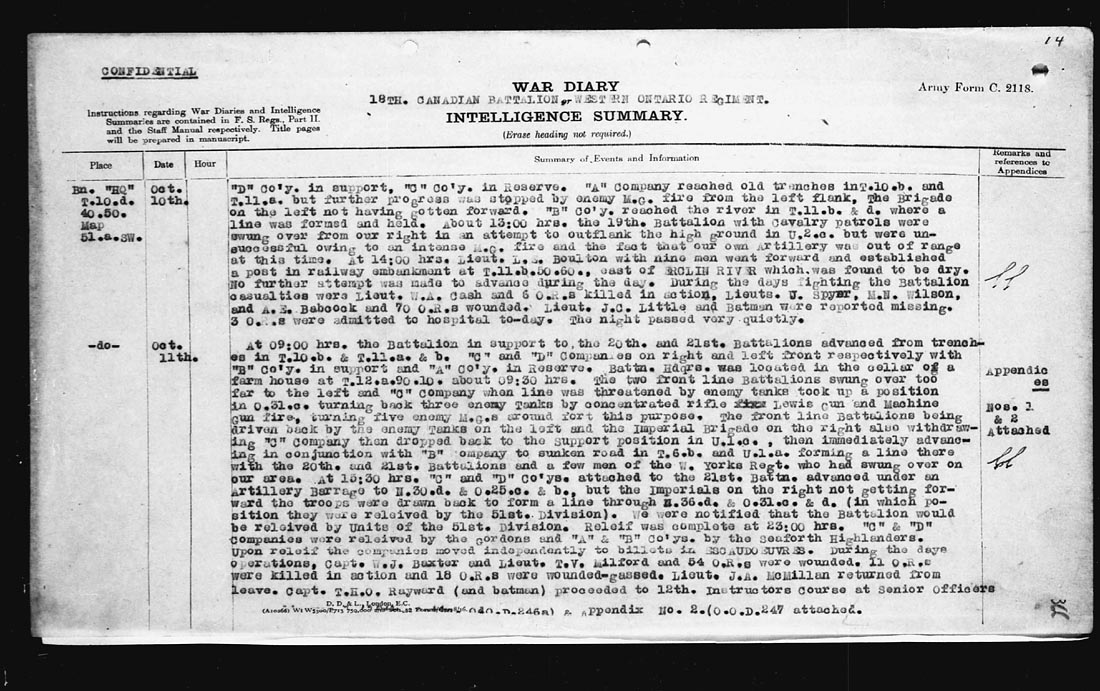
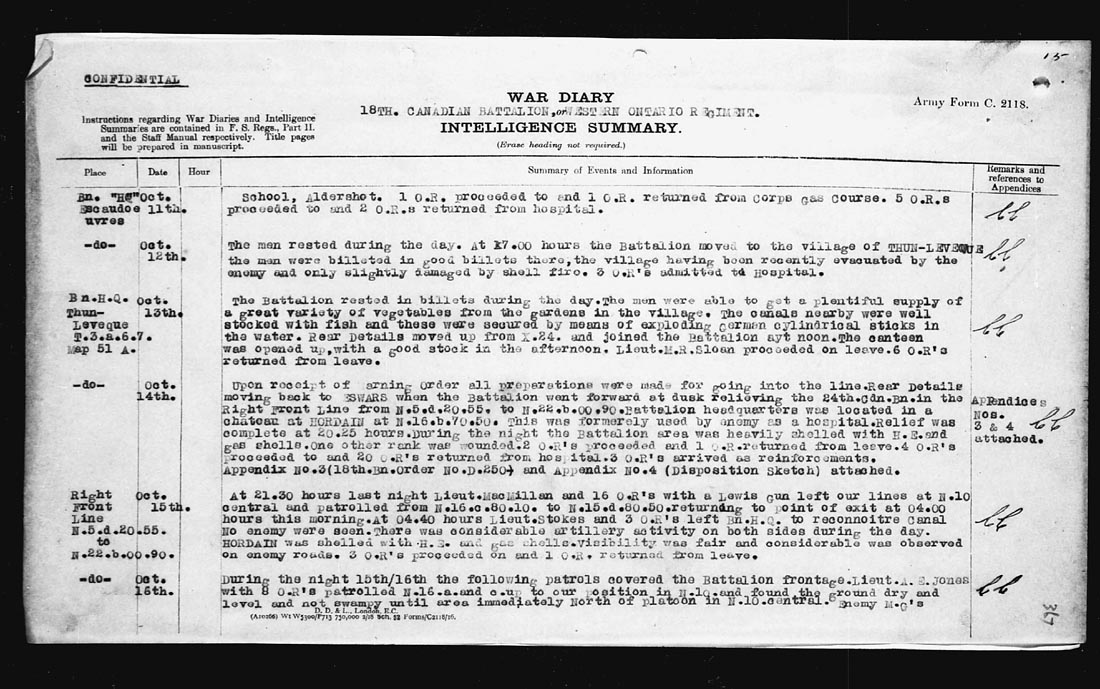
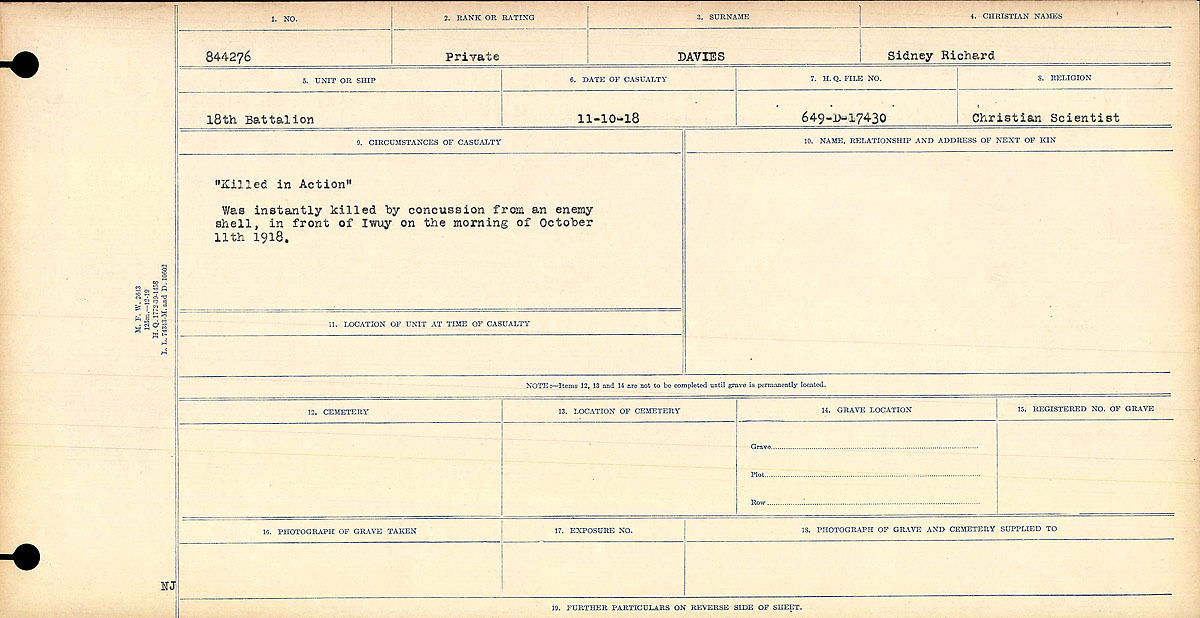
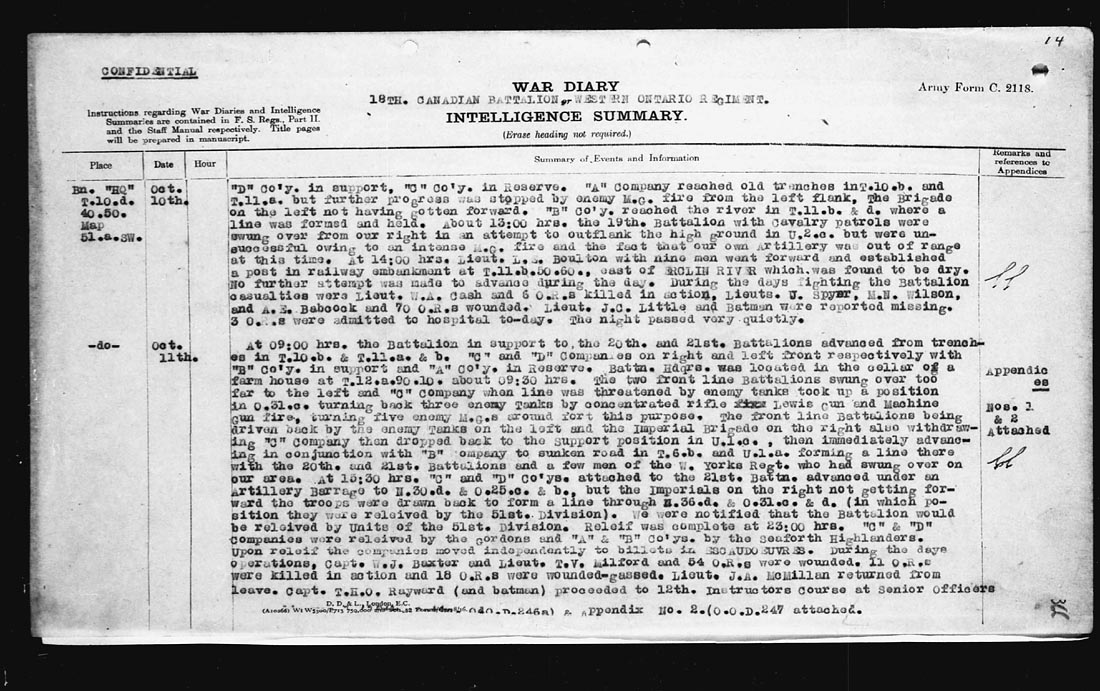
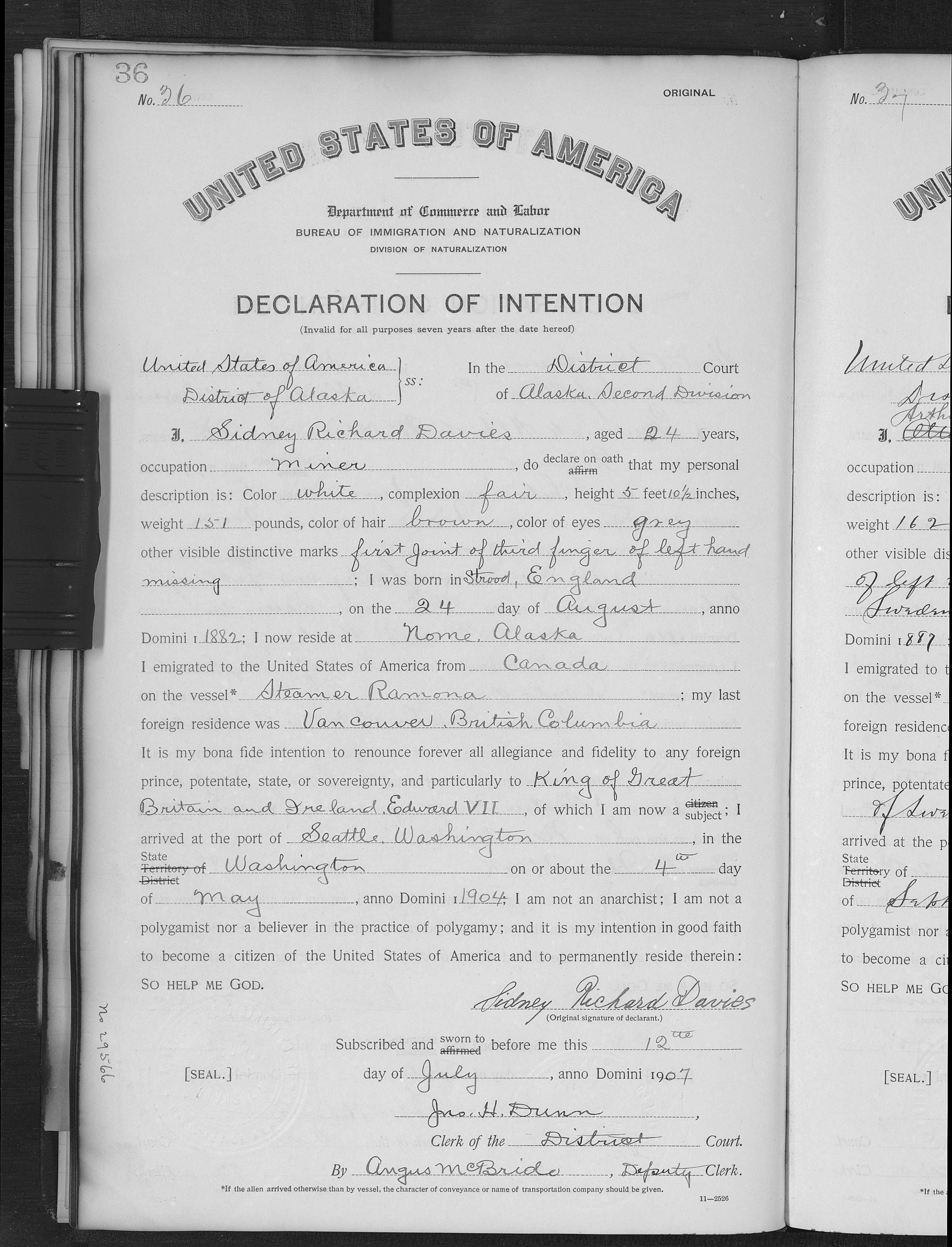
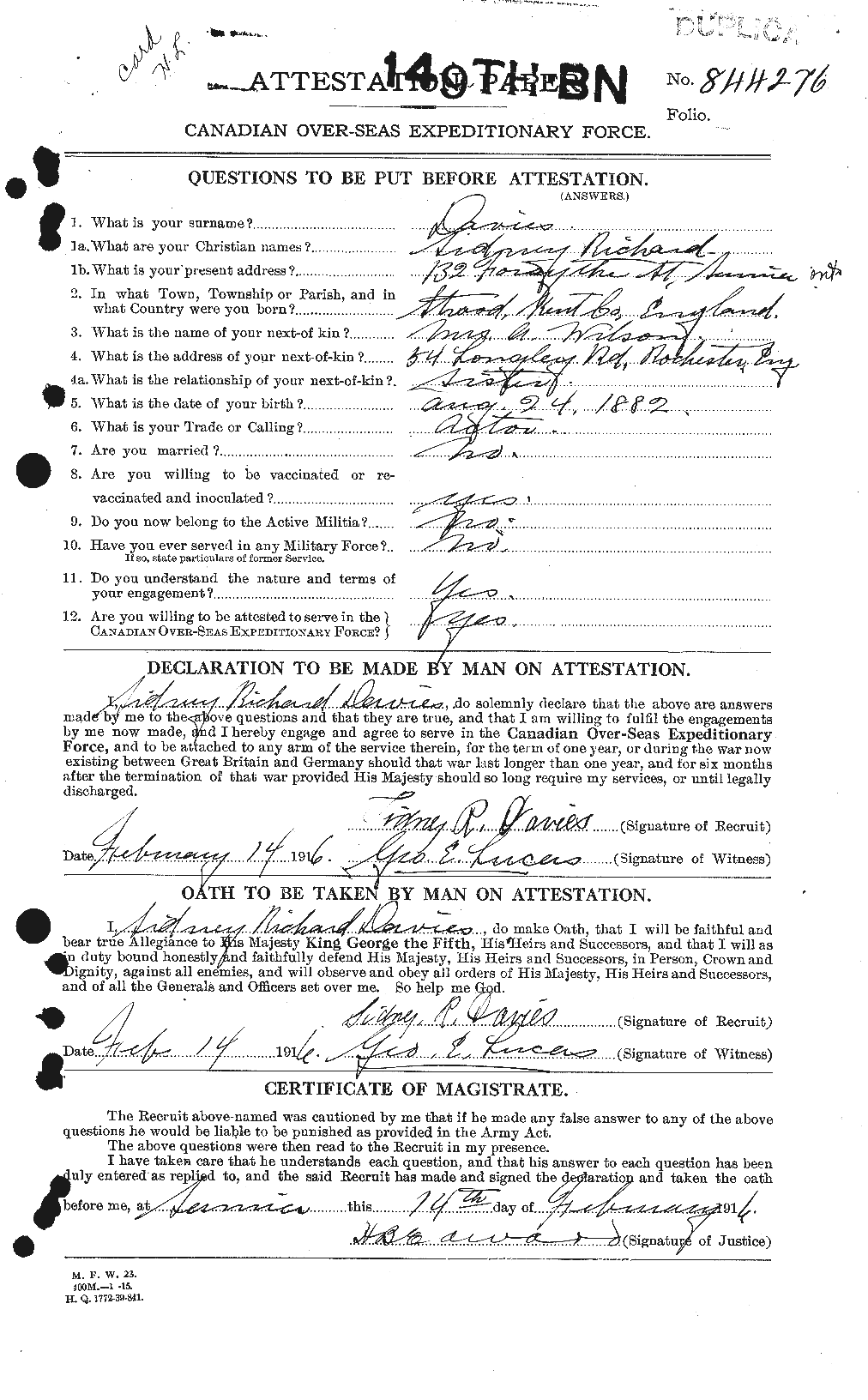
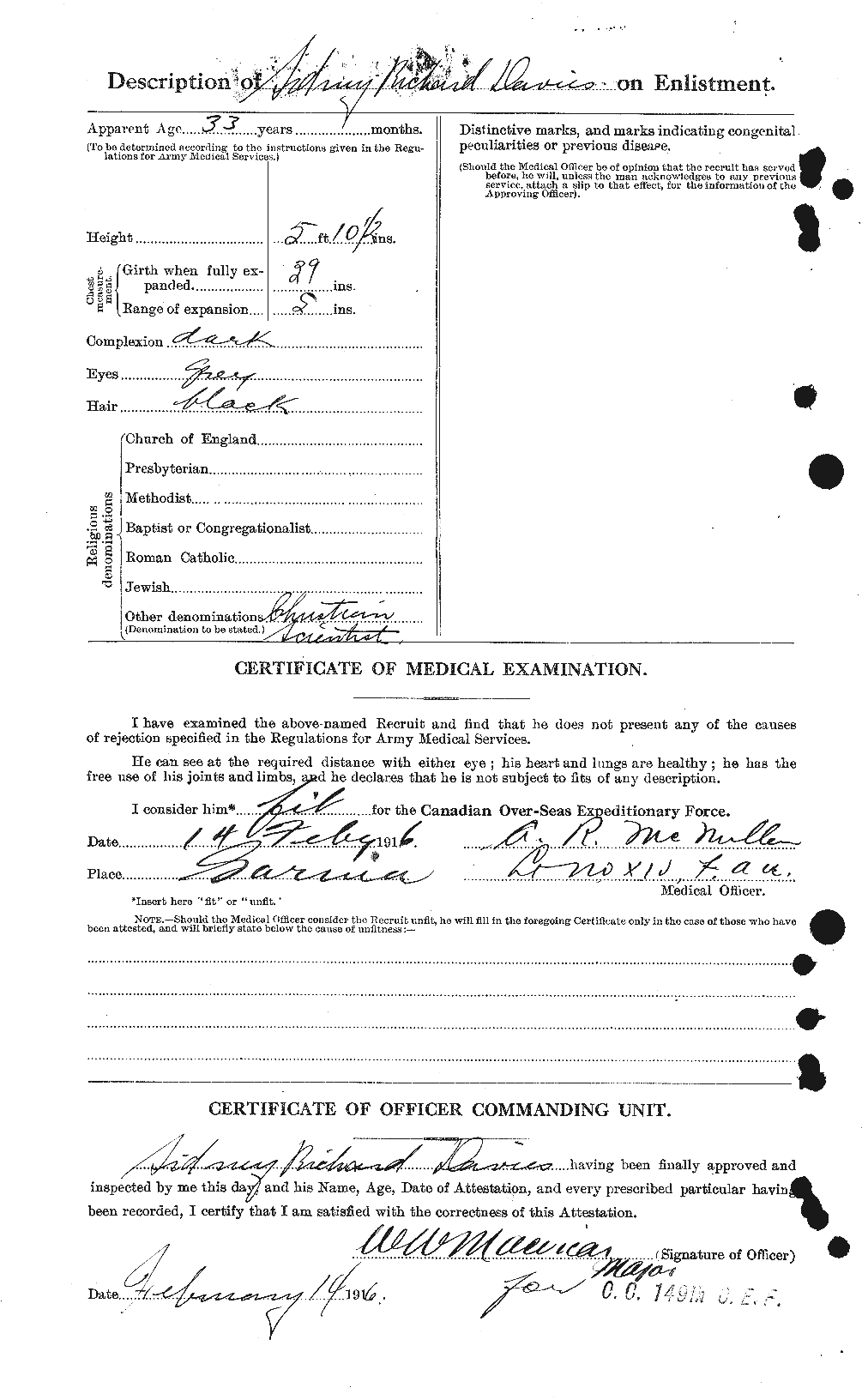
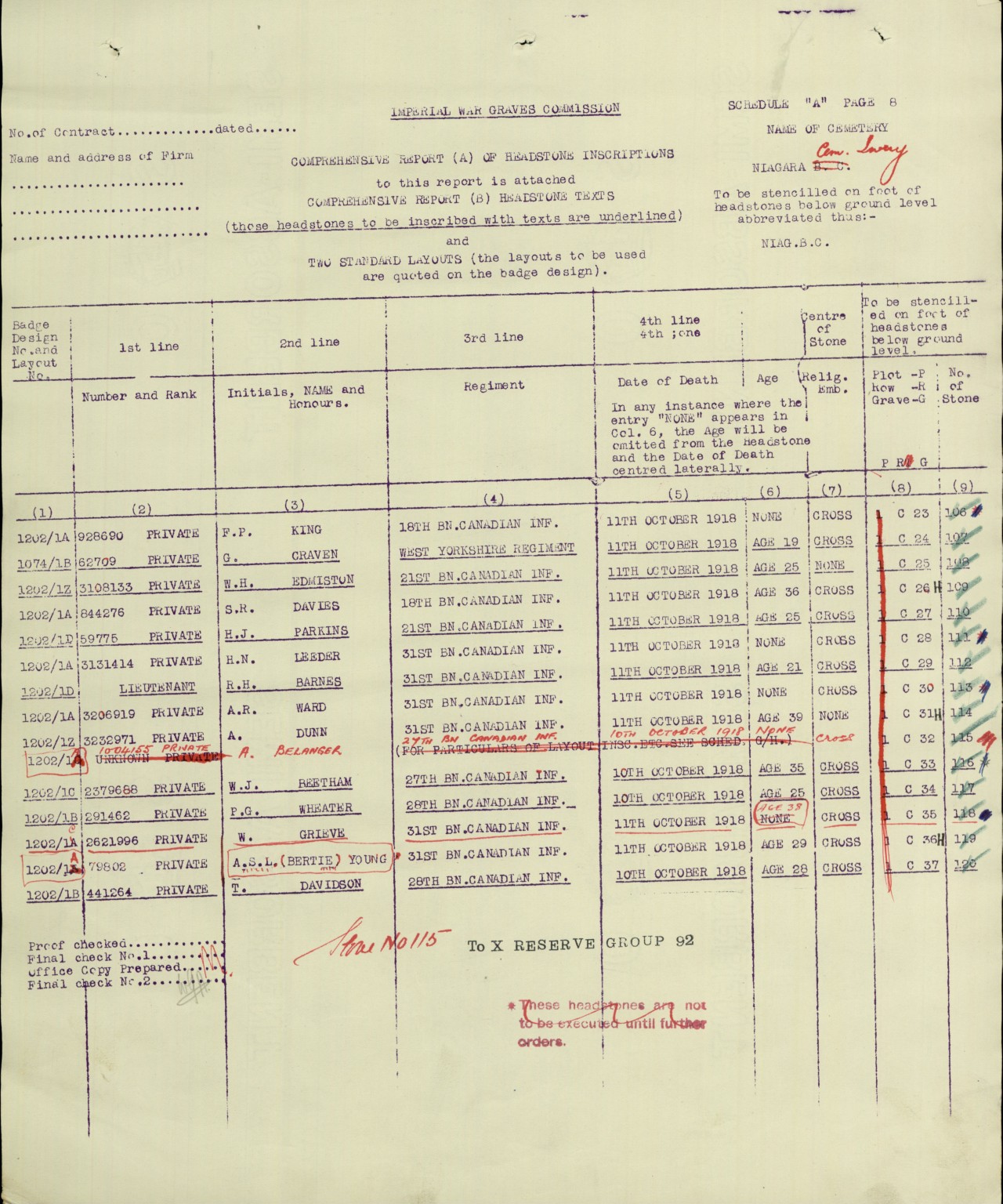
Family Search: When Private Sidney Richard Davies was born on 24 August 1882, in Strood, Kent, England, United Kingdom, his father, Richard Vickers Davis, was 40 and his mother, Mary Ann Gorman, was 25. He immigrated to United States in 1906 and lived in Nome, Second Judicial District, Alaska, United States in 1907. He registered for military service in 1916. In 1916, at the age of 34, his occupation is listed as actor in United States. He died on 11 October 1918, in Iwuy, Nord, Nord-Pas-de-Calais, France, at the age of 36.
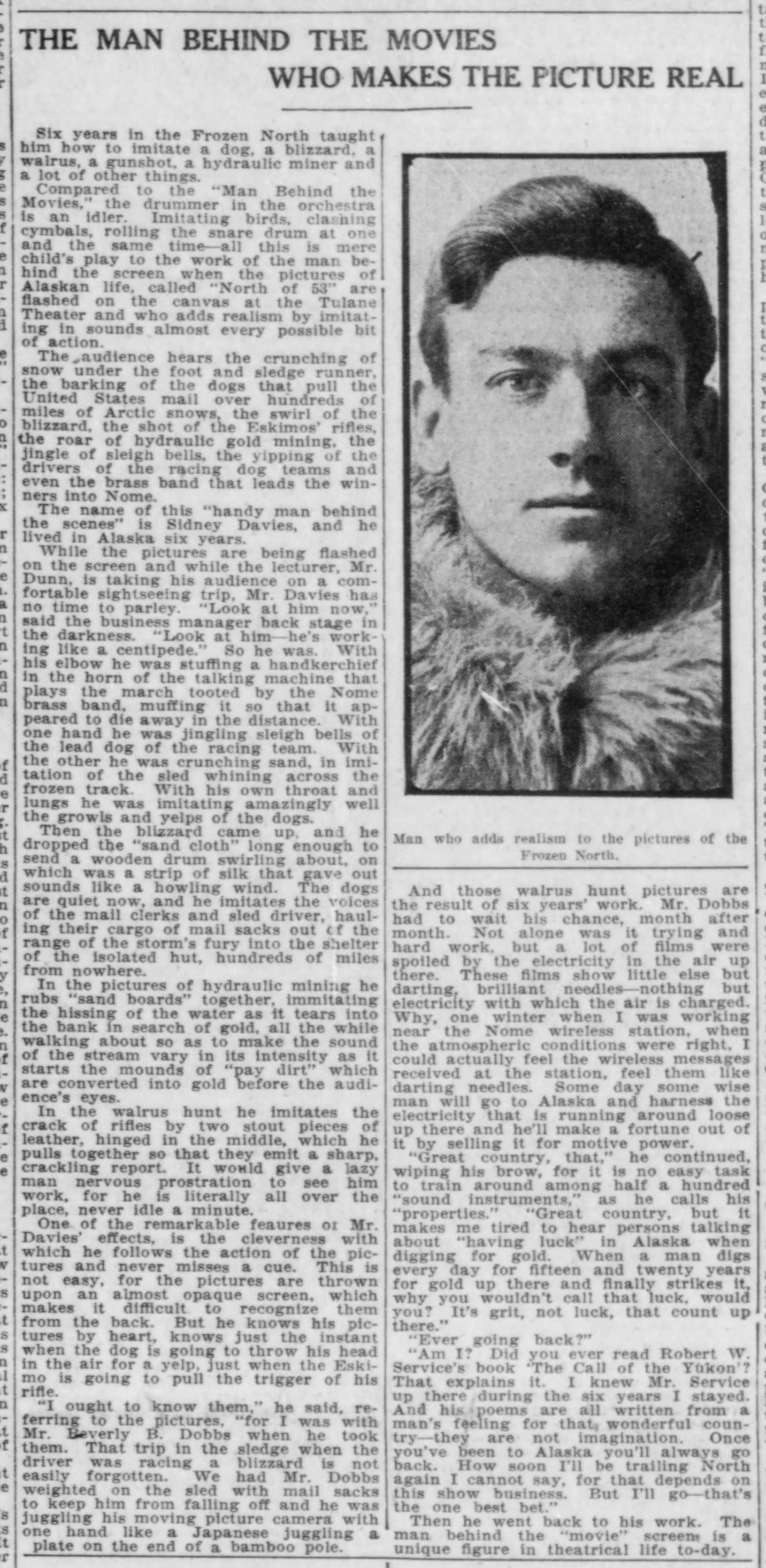
THE MAN BEHIND THE MOVIES WHO MAKES THE PICTURE REAL
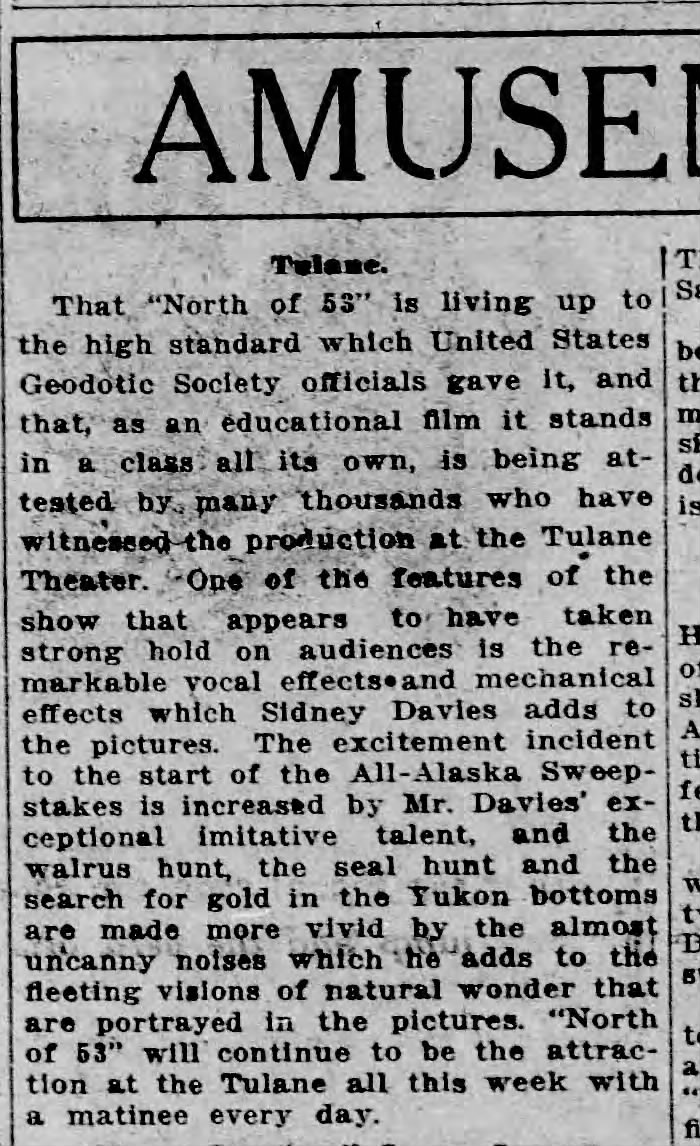
Six years in the Frozen North taught him how to imitate a dog, a blizzard, a walrus, a gunshot, a hydraulic miner and a lot of other things.
Compared to the “Man Behind the Movies,” the drummer in the orchestra is an idler. Imitating birds, clashing cymbals, rolling the snare drum at one and the same time—all this is mere child’s play to the work of the man behind the screen when the pictures of Alaskan life, called “North of 53” are flashed on the canvas at the Tulane Theater and who adds realism by imitating in sounds almost every possible bit of action.
The audience hears the crunching of snow under the foot and sledge runner, the barking of the dogs that pull the United States mail over hundreds of miles of Arctic snows, the swirl of the blizzard, the shot of the Eskimos’ rifles, the roar of hydraulic gold mining, the jingle of sleigh bells, the yipping of the drivers of the racing dog teams and even the brass band that leads the winners into Nome.
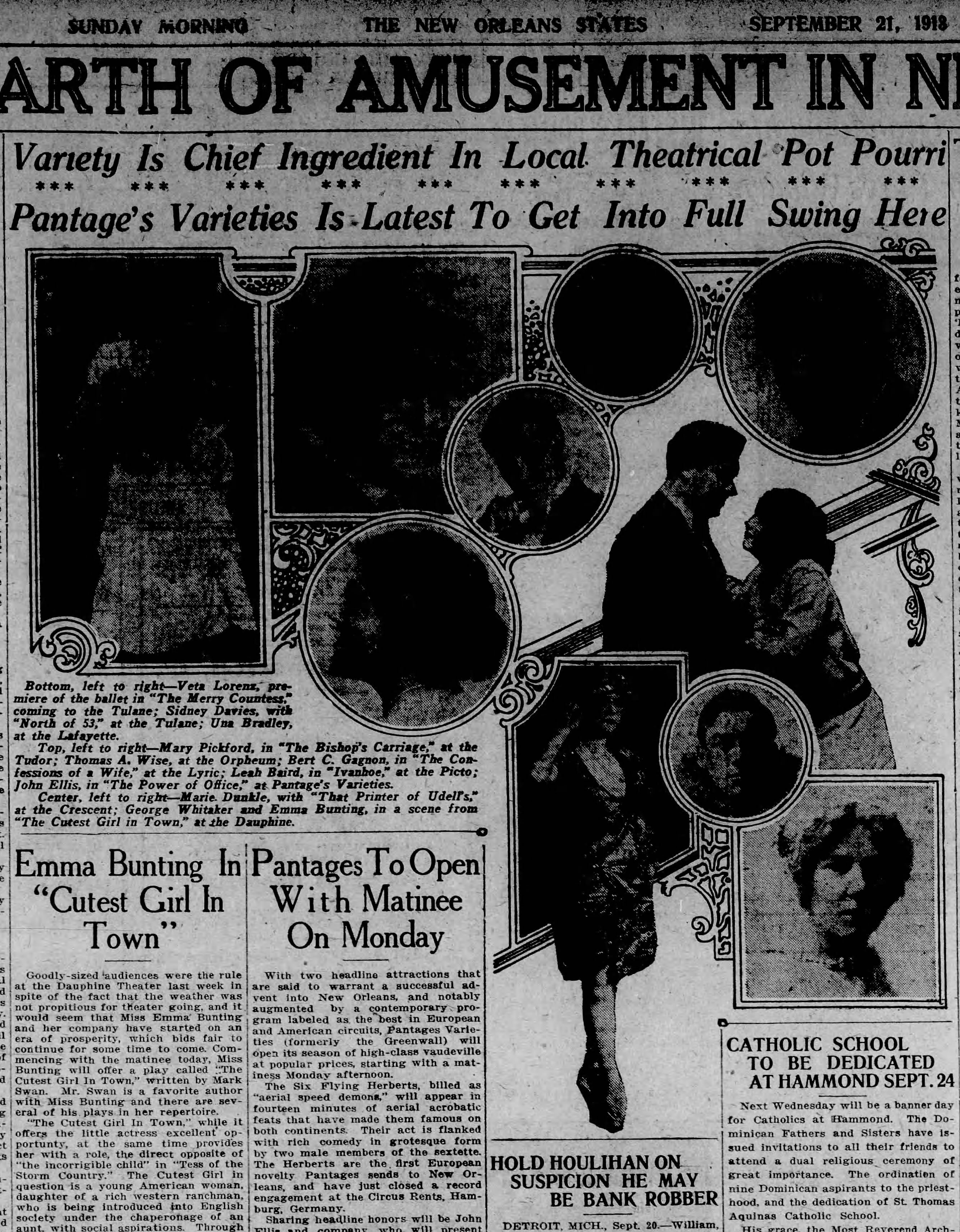
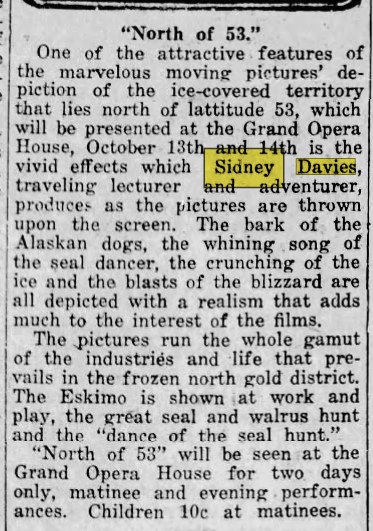
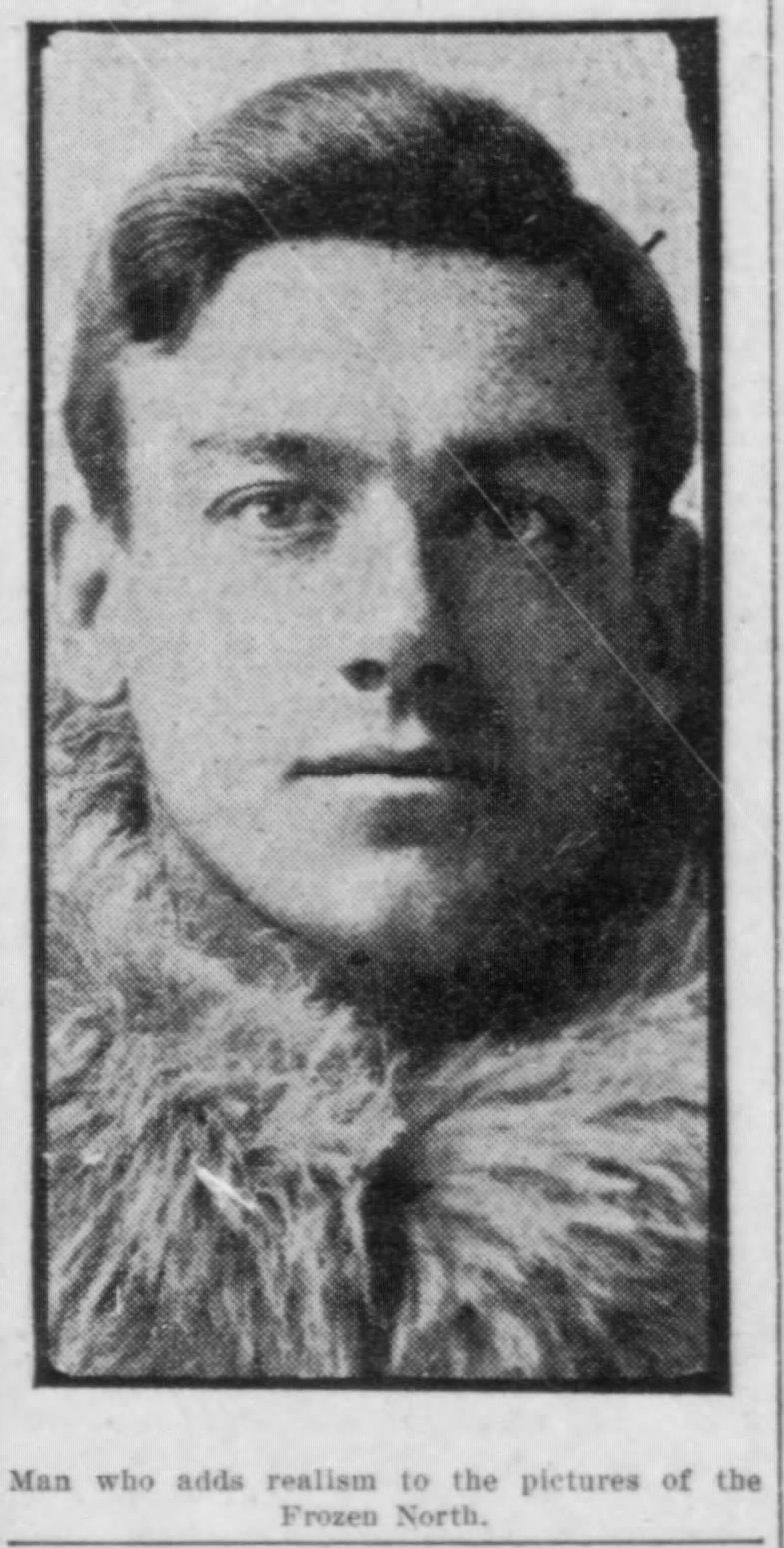
The name of this “handy man behind the scenes” is Sidney Davies, and he lived in Alaska six years.
While the pictures are being flashed on the screen and while the lecturer, Mr. Dunn, is taking his audience on a comfortable sightseeing trip, Mr. Davies has no time to parley. “Look at him now,” said the business manager back stage in the darkness. “Look at him—he’s working like a centipede.” So he was. With his elbow he was stuffing a handkerchief in the horn of the talking machine that plays the march tooted by the Nome brass band, muffing it so that it appeared to die away in the distance. With one hand he was jingling sleigh bells of the lead dog of the racing team. With the other he was crunching sand, in imitation of the sled whining across the frozen track. With his own throat and lungs he was imitating amazingly well the growls and yelps of the dogs.
Then the blizzard came up, and he dropped the “sand cloth” long enough to send a wooden drum swirling about, on which was a strip of silk that gave out sounds like a howling wind. The dogs are quiet now, and he imitates the voices of the mail clerks and sled driver, hauling their cargo of mail sacks out of the range of the storm’s fury into the shelter of the isolated hut, hundreds of miles from nowhere.
In the pictures of hydraulic mining he rubs “sand boards” together, imitating the hissing of the water as it tears into the bank in search of gold, all the while walking about so as to make the sound of the stream vary in its intensity as it starts the mounds of “pay dirt” which are converted into gold before the audience’s eyes.
In the walrus hunt he imitates the crack of rifles by two stout pieces of leather, hinged in the middle, which he pulls together so that they emit a sharp, crackling report. It would give a lazy man nervous prostration to see him work, for he is literally all over the place, never idle a minute.
One of the remarkable features or Mr. Davies’ effects, is the cleverness with which he follows the action of the pictures and never misses a cue. This is not easy, for the pictures are thrown upon an almost opaque screen, which makes it difficult to recognize them from the back. But he knows his pictures by heart, knows just the instant when the dog is going to throw his head in the air for a yelp, just when the Eskimo is going to pull the trigger of his rifle.
“I ought to know them,” he said, referring to the pictures, “for I was with Mr. Beverly B. Dobbs when he took them. That trip in the sledge when the driver was racing a blizzard is not easily forgotten. We had Mr. Dobbs weighted on the sled with mail sacks to keep him from falling off and he was juggling his moving picture camera with one hand like a Japanese juggling a plate on the end of a bamboo pole.
“And those walrus hunt pictures are the result of six years’ work. Mr. Dobbs had to wait his chance, month after month. Not alone was it trying and hard work, but a lot of films were spoiled by the electricity in the air up there. These films show little else but darting, brilliant needles—nothing but electricity with which the air is charged. Why, one winter when I was working near the Nome wireless station, when the atmospheric conditions were right, I could actually feel the wireless messages received at the station, feel them like darting needles. Some day some wise man will go to Alaska and harness the electricity that is running around loose up there and he’ll make a fortune out of it by selling it for motive power.
“Great country, that,” he continued, wiping his brow, for it is no easy task to train around among half a hundred “sound instruments,” as he calls his “properties.” “Great country, but it makes me tired to hear persons talking about ‘having luck’ in Alaska when digging for gold. When a man digs every day for fifteen and twenty years for gold up there and finally strikes it, why you wouldn’t call that luck, would you? It’s grit, not luck, that count up there.”
“Ever going back?”
“Am I? Did you ever read Robert W. Service’s book ‘The Call of the Yukon’? That explains it. I knew Mr. Service up there during the six years I stayed. And his poems are all written from a man’s feeling for that wonderful country—they are not imagination. Once you’ve been to Alaska you’ll always go back. How soon I’ll be trailing North again I cannot say, for that depends on this show business. But I’ll go—that’s the one best bet.”
Then he went back to his work. The man behind the “movie” screen is a unique figure in theatrical life to-day.
The Times Democrat 18 September 1913. Page 4

Iwuy
Departement du Nord
Nord-Pas-de-Calais, France
Plot: C. 26.



Leave a Reply