Link to November 1916 War Diary Transcription
November found the 18th Battalion approximately 50 kilometers from the hell that was the Somme. Now located in the Lens Sector in the vicinity of Bully-Grenay the Battalion was able to find relative rest and recuperation after the actions of September and October.
The first part of the month the Battalion was in Brigade Reserve and was able to exercise the inevitable bureaucratic activities of a clothing and pay parade along with a foot inspection. This activity also included an inspection of all non-commissioned officers by the General Officer Commanding 4th Canadian Infantry Brigade and an inspection of the newly issued Lee-Enfield SMLE rifles by the Battalion armourer.
The Battalion relieved the 20th Battalion on November 4, 1916 unit November 10. During that tour the Battalion had some minor occurrences with 1 other rank accidentally wounded and some soldiers reporting sick. Corporal Hunt, a Battalion sniper, claimed one German dead and patrols coving the Battalion frontage reported “all quiet”.
The Battalion was able to enjoy a relief in Brigade Support from November 10 to 16 and the War Diary reflects in the entry for November 11, 1916: “Battalion in Brigade support. Rifle inspection by Company Commanders. 2 o.r. admitted to hospital.” The men of the 18th had no way of knowing that this date was to be the date of the Armistice 2 years hence but one could imagine that if they could wish it the war would end instantly.
From November 16 to 22 the Battalion was in the line and the War Diary reflects a more aggressive posture of the C.E.F. when in the line. Patrols were active (sadly there are no reports in the appendices of the War Diary relating the patrol experience. See the 19th Battalion War Diary for documentation in this regard) with 4 patrols being active on the night of November 21, 1916.
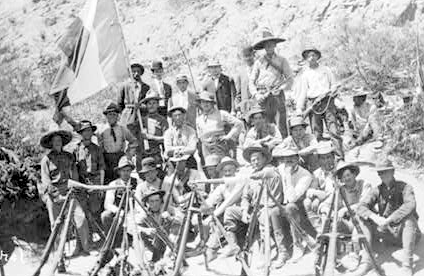
In Brigade Reserve from November 22 to 28 the Battalion attended to instructional, pay and clothing parades and Sergeant C.J. Jackson, reg. no. 54145 was promoted to Lieutenant. The now Lieutenant Jackson had the unusual distinction of having served with the Mexican revolutionary Pancho Villa in the 1st Battalion. It appears this American’s prior military experience in Mexico gave him the experience to rise in the ranks and become an officer.
From November 28 to 30 the Battalion was in Brigade support.
Overall, the month of November was characterized by a more assertive stance with night patrols into No Mans’ Land with the intent of gathering intelligence and inderdicting German patrol activity and preventing the Germans gathering intelligence on the Canadian forces. These patrols appear to be successful as no major action occurred and the Battalion suffered only two soldiers who died during the month of November.
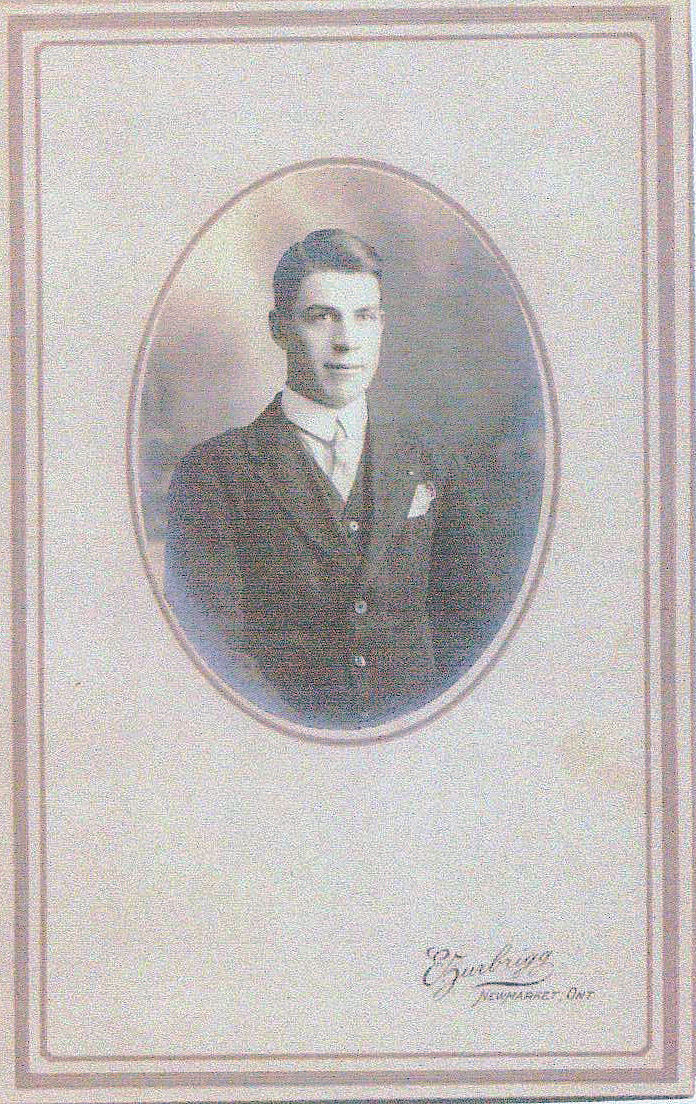
Private George Wellington Belfry, reg. no. 643576 of “D” Company, 18th Battalion, Western Ontario Regiment died of wounds on November 8, 1916. He suffered a G.S.W. to the chest on September 16, 1916 in the Somme sector and was transferred from the No. 4 Casualty Clearing Station and transferred on October 1, 1916 to the No. 6 General Hospital in Rouen, France where he would eventually succumb to his wounds.

Private David Gray, reg. no. 124644, 18th Battalion, Western Ontario Regiment also died of wounds:
“David was seriously wounded at the Somme, September 15th and was reported at No. 13 Stationery Hospital at Boulogne on September 16th with gun shot wounds to his right ear, lips, and right cheek. He was also hit in the right thigh and had a compound fracture of the femur. By October 5th his condition had worsened. He was transferred to Manor Court Hospital at Folkstone, England by October 19th, where he died of his wounds on November 23, 1916 at the age of 41 years and 7 months. David is buried at Shorncliffe Military Cemetery, Kent, England. Two of David’s nephews, Roy Gray and Jack Imrie were able to be on hand for the funeral.
Two of David Gray’s nephews also died as a result of the war. Sgt. Ronald Maxwell Gray #124654 died on February 11, 1917 from wounds received that same day, and is buried at Aubigny-en-Artois, Pas-de-Calais, France. Captain James Roy Gray M.C. #53114 survived the war but died from the ‘Spanish Flu’ on Feb 18, 1919. He is buried in Brookwood Cemetery, London, England.”
These deaths, the result of the action of the Somme, give some idea of the continued impact to the men of the 18th. Regretfully, after a relatively uneventful month of action the War Diary did report the following: ‘Position as yesterday. Routine. 8 o.r.s. previously reported Wounded now reported “Wounded and Missing.”.
Discover more from History of the 18th Battalion CEF, "The Fighting Eighteenth"
Subscribe to get the latest posts sent to your email.
 History of the 18th Battalion CEF, "The Fighting Eighteenth"
Leave a comment