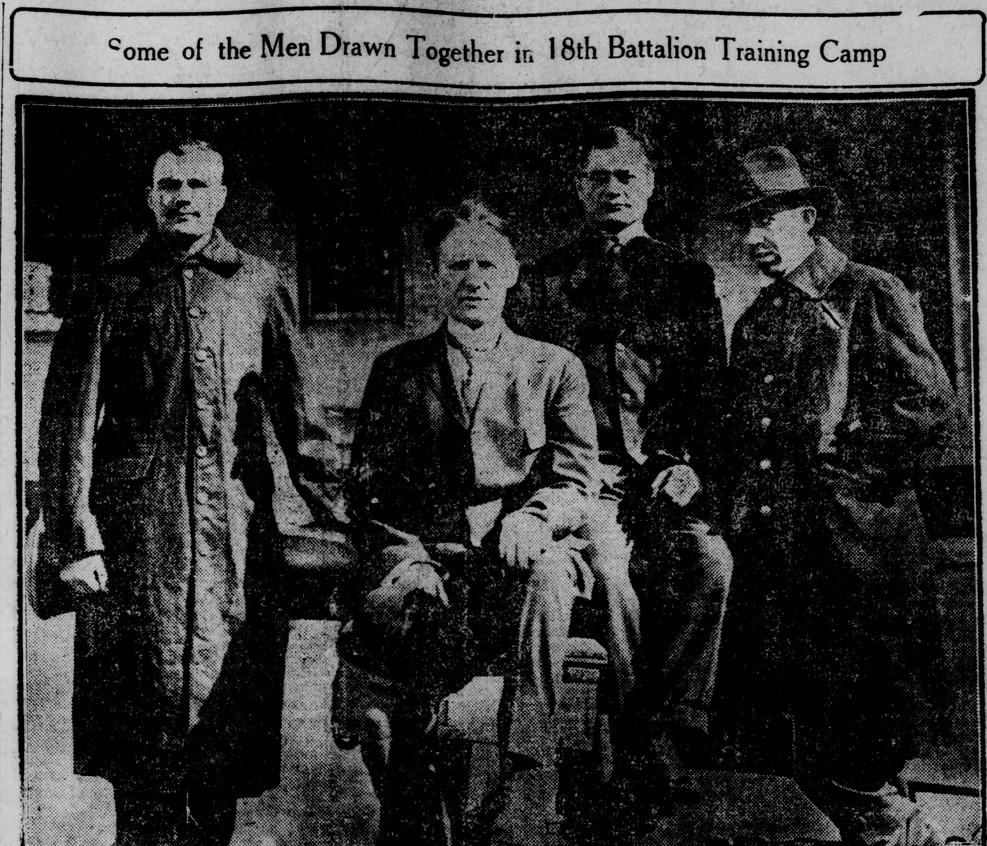
The above photo shows four men claiming to be from Russia. All appear eager to enlist in the Canadian Army in preference to the Russian Army. Perhaps their heritage more strongly identified with their homelands than that of Russia as it was an option for men of the Russian Empire to enlist with the Russian Army through its embassy in Ottawa. The Russian Empire invoked mandatory military service for men immediately before the beginning of the war.
The 18th Battalion had an advantage for those living in the United States as being on the border with Detroit, Michigan many men living close to Windsor could come and enlist. Such was the case with two of the men, Dondik and Nowitski.
As these men are clearly identified as coming from the Russian Empire (though they were not the only members of the 18th to be from this Empire) it would be interesting to compare their service with the 18th Battalion and the Canadian Expeditionary Force.
In summary:
Sergy Dondik
The records show that Sergy Dondik[i], a machinist from Chicago, enlisted with the 18th Battalion on 22, October 1914, the first date available to enlist. This eagerness led to his service with the 18th Battalion from that date until 6 July 1918 when he was discharged after attachment to Headquarters Overseas Military Forces of Canada (OMFC). His discharge rated his MILITARY CHARACTER as VERY GOOD and he was discharged as he was “…taking up special work under the War Office. His address was the care of the Great War Veterans Association at 901 Hastings Street, Vancouver. This “special work” was probably related to the planning of the Siberian Campaign the Canadian Forces were preparing for.

During his war service in Europe he, along with the 18th Battalion trained at West Sandling Camp, Kent, and then went “overseas” with the Battalion on September 15, 1915. He served in combat until he was stricken with acute nephritis, a kidney ailment. He left the Battalion on 6 March 1916 and was sent to England for treatment and convalescence. By July 1916 he was well and moved to several reserve battalions when he ended up being attached to the Russian Government Commission at Headquarters OMFC.
With the end of the war and the Siberian adventure Dondik emigrated to the United States via Detroit, Michigan on 17 August 1919 and became a husband to a woman with the name Beatrice. He had two children, Dora (29 July 1920, Vancouver, B.C.) and Lillian (15 September 1924, Detroit, Michigan) and submitted a naturalization petition for American citizenship on 8 April 1927.
He was not able to enjoy his new citizenship status as he passed away on 27 April 1929 of an unknown cause.
John W. Pearson
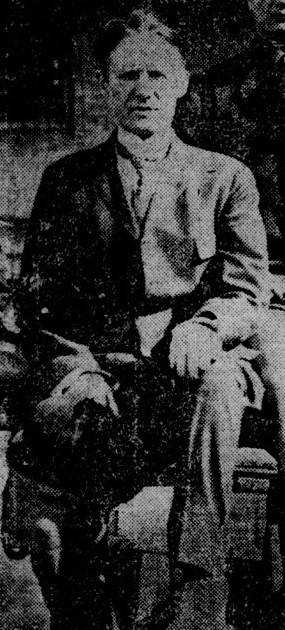
In the case of John W. Pearson[ii], a clothing cutter, his service was not quite so exemplary. He struck off strength with the 18th Battalion on 15 January 1915. A search for this man found no reference to him and he disappears into history. He was listed in his service record as a deserter.
Alexander Ushkoff Ansley
The second oldest volunteer was Alexander U. Ansley.[iii] He was born 2 July 1887 at Ehoomer, Minsk, Russia. His trade or calling was listed as a fireman, which probably refers to his role working on a railway and his service file does not indicate where he was living before he enlisted with the 18th Battalion thought his discharge papers show his address as General Post Office (GPO) Toronto and that he indicated that he would be living in Brantford, Ontario after his discharge.

His service experience shows he went overseas with the 18th Battalion and served until he suffered a GSW to his left thigh on 25 June 1916. He was sent to England for treatment and recuperation. After his recuperation is complete he is assigned to Canadian Headquarters effective 10 January 1917. This assignment ends 16 March 1917 and after being assigned to the Canadian Machine Gun Depot is attached to the War Office for duty.
It appears that his wound has affected his physical effectiveness as a solder and though he was returned to France, probably with the expectation of rejoining the 18th Battalion he is assigned with the Canadian Corps Camp Company attached to the YMCA effective 31 May 1917. On 10 August 1917 he is classed PB (Permanent Base) medically for “old wounds” meaning he would never see active combat service again.
He serves as a “Dump Guard” and then is assigned to the Canadian Forestry Corp (CFC) effective 27 April 1918. He only serves in this capacity until to the end of May when he is assigned to the Canadian Labour Pool after he suffers from a deformity of his hand as an old injury on his right hand flares up, preventing him from doing his duties with the CFC. He then is transferred to the General Depot and back to England being sent back to Canada 7 December 1918. He is discharged at Toronto, Ontario on 13 January 1919 giving his proposed residence as Hamilton, Ontario.
In the instance of Vladimir Nowitski[iv], a student, his journey during his war service would be parallel that of Private Dondik. He too, appears to have been residing in Chicago with his brother Victor before he enlists.
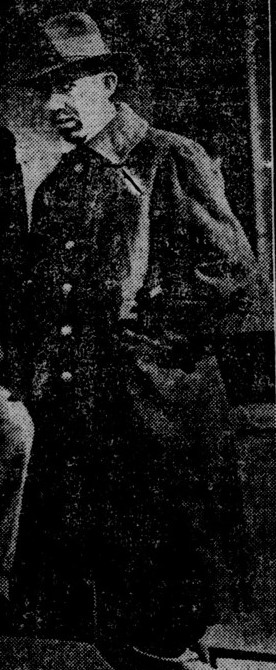
He, too, would follow the same path as Dondik, arriving in France on 15 September 1915 and serving with the 18th Battalion until 18 May 1916 when he suffered a gunshot wound (GSW) to his left leg. It was a minor wound, and he was discharged for duty two days later. Ten days later, though, he was sent to No. 5 Canadian Field Ambulance for a suspected sarcoma, but it was later found to be a problem affecting his lymph nodes (adenitis) and he was returned to duty at the end of June. His medical issues continued and in mid-September he was suffering “ulcers of the legs” and sent to England aboard the HS Jan Breydel for treatment.
Similar to Dondik, his Russian background led to an appointment to Headquarters OMFC effective 10 July 1917 and he had been made a temporary lieutenant the previous month. He was officially attached to assigned as a Russian Military Attaché.
After this duty ended, he was seconded to the War Office, British Forces Northern Russia. This assignment ends on 31 May 1919 and he is posted to Canada being discharged one year later.
He served in Russia with the British Forces Russia starting 5 September 1918 as there is a pay record showing an “Artic Allowance” that was issued for 181 days with a payment of $132.13 and a reference to it on his discharge papers. He was discharged from duty 31 May 1920 and continued service to the War Office after his discharge.
At some time in the 20s this man leaves service with the War Office and moves back to Chicago. He passes 5 July 1947 in Chicago and is buried at Resurrection Catholic Cemetery and Mausoleums, Justice, Illinois.
Conclusion
Of the four men, one deserted. The rest of the enlistees served the CEF dutifully with two of the men becoming officers and assisting with the Allied effort in Russia during the Russian Revolution. It appears that not only their ability to speak Russian and other languages of the region was valuable to the British Empire but their contributions let to a position of responsibility and Nowtiski was to earn a Member of the British Empire (Military).
The men that came from the United States returned to their lives in America and the one man that appears to have lived in Canada before the war stays in Canada, though no trace was found of him after his discharge in 1919.
Did this photograph bind these men together and they ended up in the same Company during the build of the 18th Battalion? Did their shared heritage and language lead to supporting each other as they moved through the experience of the 18th Battalion until they were separated by the circumstances of their service? It appears that their wounding or illness led to the military authorities reevaluating the utility of two of the men and allowing them to be reassigned to duties of a completely different nature than that of combat.
Did they keep in contact with each other during and after the war? As is often the case, common experiences in a military unit create strong bond and these men may have continued contact after the war.
We may never know but take time to acknowledge their service and sacrifice.
[i] Private Sergy Dondik, reg. no. 53218.
[ii] John W. Pearson, reg. no 53150.
[iii] Private Alexander U. Ansley, reg. no. 53084. His service records suffer from inconsistent spelling and his middle name is listed with a “U” or “W” on some documents.
[iv] Private Vladimir Nowitski, reg. no. 53268. This soldier’s name is problematic as he later changed it to Valdemar Bruno Nowitt in England. He also filled out a will 7 October 1918 showing is (then) full name as Vladmir Brourslsus Nowitsiki.
Discover more from History of the 18th Battalion CEF, "The Fighting Eighteenth"
Subscribe to get the latest posts sent to your email.
 History of the 18th Battalion CEF, "The Fighting Eighteenth"
Leave a comment