In the darkness of a soft summer’s Kentish night a chorus of an old Scots love song wafted in the night sung by the men of the 18th Battalion recently arrived in England…
Maxwelton’s braes[i] are bonnie,
Where early fa’s[ii] the dew,
Twas there that Annie Laurie
Gave me her promise true.
Gave me her promise true –
Which ne’er forgot will be,
And for bonnie Annie Laurie
I’d lay me down and dee[iii].
The song lyrics are available at the end of the blog post.
This moment in time would be lost save for the letter of a soldier who was witness to this event.
Thank heavens for Private (later Acting-Sergeant) Fred Young. Effectively the chronicler of the experiences of the 18th Battalion with his numerous published letters in several newspapers from South-Western Ontario, such as the London Advertiser and Free Press, The Windsor Star, and others.


If not for him, many of the events and soldiers of the 18th Battalion would live in obscurity without his many letters outlining the lives and circumstances of his battalion.
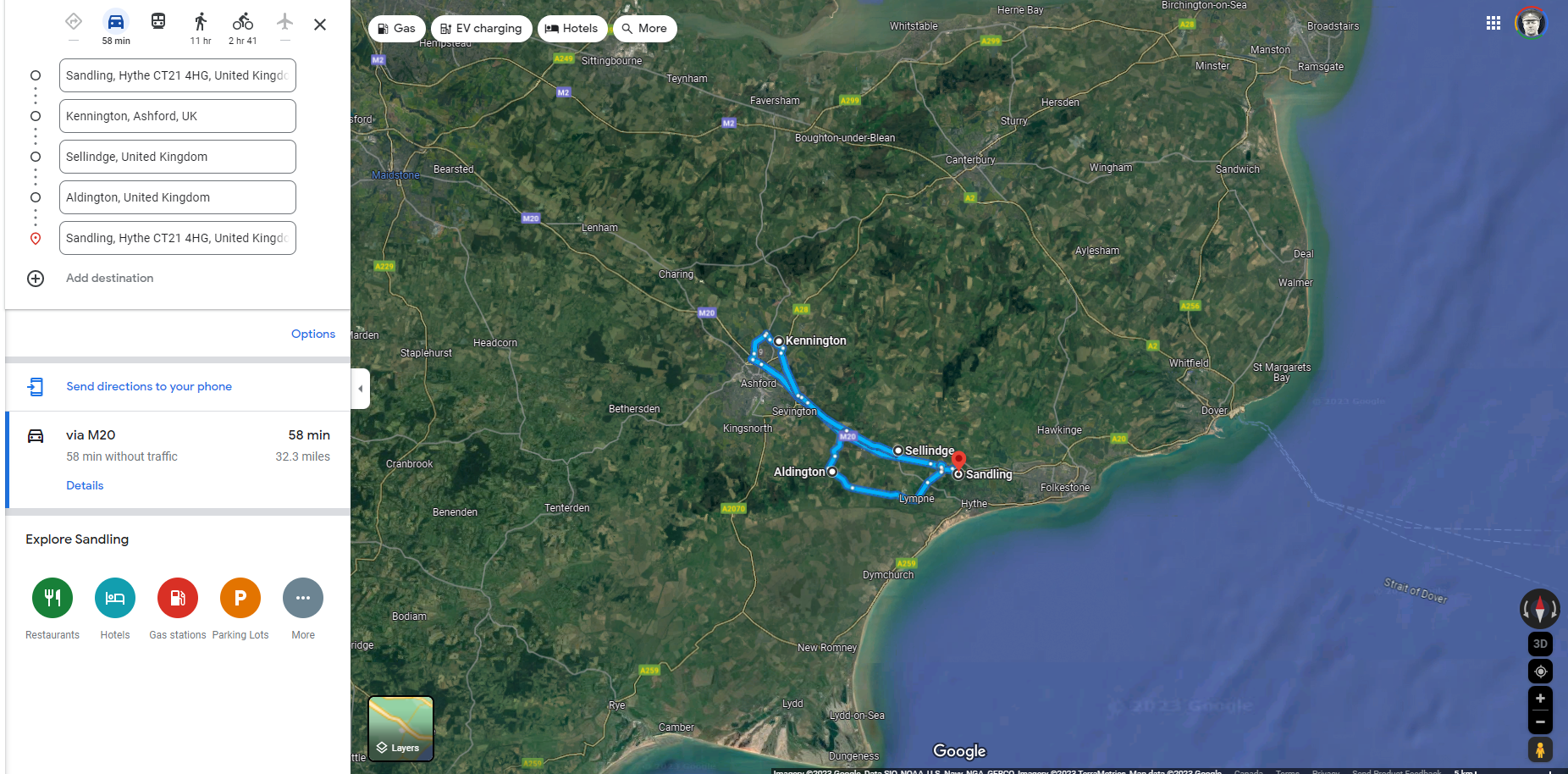
Specifically, the instance in question was a four-day divisional exercise in August 1915. The 2nd Contingent comprised of the elements of the 2nd Division and its supporting units had amassed it self near Shorncliffe, Kent with many units billeting and training at the East and West Sandling Camps. For the 18th Battalion, this involved arriving in England at the end of April 1915 and arriving at West Sandling which signaled the start of the next stage of training and organization after its creation at London, Ontario in October 1914.
The next step of training and acclimation to the conditions of mass-produced death by artillery, gas, and machine gun fire in static trench lines would be addressed. As to the realism of the training it was better than that experienced in Canada but there seems to be, in my opinion, a “scouting” like feel to the training process. Obviously, many of the men of the 2nd Division were eager for action, but one doubts, even after a year of war, that, even with the events recounted through the newspapers and letters, the men had no realistic idea what the conditions of this war was about.
Thankfully Private Youngs letter, transcribed in full below, helps us understand the tone and scope of his experience during the latter part of August.
The 18th Battalion’s August 1915 War Diary is lacking in detail and simply states the following for the dates of 22 to 25 August 1915:
| Date | Summary of Events and Information |
| 22 | Start of 4 day Divisional manoeuvres – Bivouac at HATCH PARK – night operations. |
| 23 | Attack on KENNIGNTON – Bivouac at ASHFORD. |
| 24 | Billeting scheme at ASHFORD. |
| 25 | Attack on line near OTTERPOOL – Return home. |
In contrast, the War Diary of the 21st Battalion is replete with details. It gives a fuller, albeit brief, explanation of the exercise and includes in its appendices the 4th Brigade orders. From this war diary we know the following:
DIVISIONAL TRAINING
2ND CANADIAN DIVISION
4th Tactical Exercise
Aug 23rd & 24th, 1915
GENERAL IDEA
War has been declared between a Western country – WHITE and an Eastern country – BROWN, whose frontier is the Railway from CANTERBURY to RYE.
A white division is mobilizing at MAIDSTONE and a Brown Division (2nd Canadian Division) at FOLKESTONE. On Aug the 22nd the mobilization of the Brown Division has been completed, but only two Infantry Brigades of White together with a Brigade of Field Artillery and a Mounted Brigade are in a fit state to move.
On this date the Brown Military authorities decide to use the 2nd Canadian Div in a dash across the frontier to break up the mobilization taking place at MAIDSTONE.
The GOC White Div at MAIDSTONE decides to push forward all available troops to EASTWELL PARK to hold the Brown Division on the line of the GREAT STOUR.
No such documentation exists with the 18th Battalion War Diary.
So, one needs to find other sources and Private Young comes to our rescue. His other letters, like this one, express aspects of martial camaraderie and loyalty to his unit that are particular to that of the men and women who serve in the military.
This letter is timely as it was published on 13 September 1915, just two days before the 18th Battalion, along with the 2nd Division, Canadian Expeditionary Forces, headed “overseas” to begin their service in Belgium in the Ypres Sector.
The letter begins with a description of the 18th Battalion’s participation in the Divisional scheme. With it established that the weather was fine for the “scheme” Private Young set the stage for our interest in how the Manoeuvres affected the men. Note that it is the weather that “…accounted largely for the success of the operations.”

The importance of mail as a moral booster is readily apparent as Young describes how the local inhabitants “became genuinely alarmed as the boys flock around their platoon orderly sergeants.” Without the citizens of Ashford understanding the context of this sudden activity Young surmises that they are alarmed that this reaction to the arrival of mail from home was related to another “dreaded” Zeppelin raid. This fear was not unfounded as Zeppelin L 11 had made an abortive attempt to bomb London on 17 August 1915 and during its efforts had bombed Ashford with nineteen incendiaries and two high-explosive bombs with limited results, having been reported to have killed some sheep and a couple of hens, though the total effect of the all the Zeppelin raids that night resulted in 10 killed, 48 dead, and 30,750 pounds of damages.[iv]


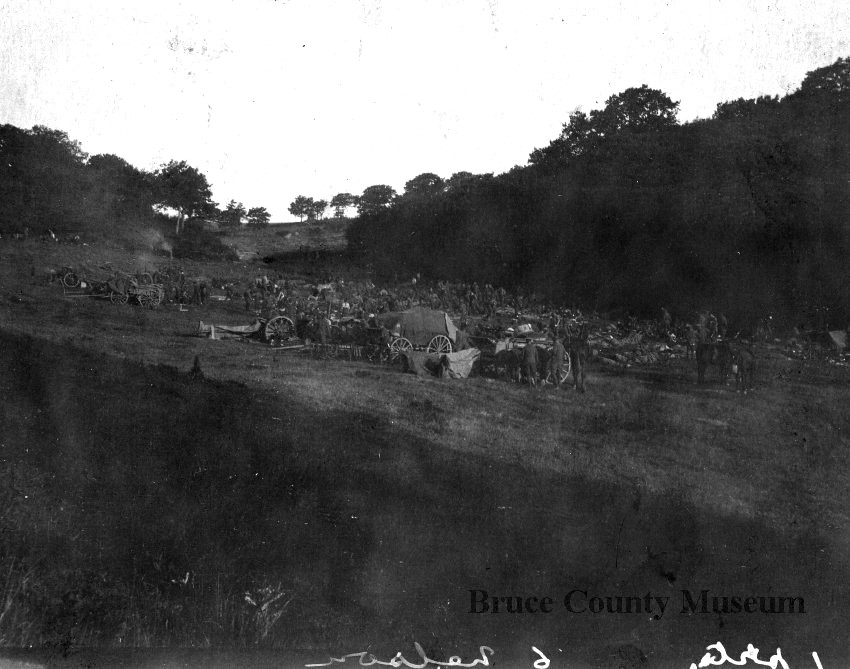
The wonderful encampment was a comfort to the men and they sang “Annie Laurie”, a song written by Alician Scott in 1834/1835 being her adaptation of a poem written by William Douglas (1682?-1748) of the Royal Scots from Dumfriesshire written for his love interest, Annie Laurie (1682-1764).[v] This song, reminiscent of the World War 2’s Lili Marlene speaks to the expression of longing for the love and comfort of female companionship, of which military life for the men of the 18th Battalion had been bereft of since their embarkation to England in April 1915.

He effectively contrasts the human endeavour of war with that of the pastoral when he describes the difference between soldiers “fully prepared for war…while flocks of sheep graze contentedly…” A contrast that would be sharpened when the men of the 18th get to the “sharp end” when they occupy the trenches in Belgium several weeks hence.
Young then describes the “battle” – put in quotations indicating that is was not much of one – and on completion the soldiers march back from the Ashford assembly area, singing a rendition of the popular war song “Keep the Home Fires Buring Till the Boys Come Home” on their way back to their camp at West Sandling and coming to a realization how much they appreciate the beds in their billets, “pallets of straw…look might good.”
With the impending transfer of the 2nd Division to the Continent the men of the division were expectant for the coming inspection by King George V. The King had inspected the 1st Division before it embarked for service on the Continent and many a man would be thrilled with the opportunity to see their Sovereign in the flesh. Many men would of seen pictorial, photographic, and cinematic representations of their Sovereign and would not have envisioned that sometime in their lifetimes, save for a Royal Visit to Canada, to see their King.
Young’s description mixes this news with the required implementation of “respirators”, or gas masks, introduced to counter the German use of poison gas and Ypres in April of that year. These respirators were early versions of the mask, called “tube helmets”, were basically cloth hoods with vision ports like eyeglasses and a tube for breathing. They were impregnated with chemicals to counter the gas used by the Germans to asphyxiate and disable soldiers.

The letter ends with the news of the second death the 18th Battalion experienced since it arrived in England with the news of Corporal Alfred Aldersley demise from bladder cancer. He had been in hospital starting 28 May 1915, only one month after arriving in England. He had been admitted at Moore Barrack Hospital then transferred to Shorncliffe and then to Westminster Hospital in London for an operation which was recorded in his service records with the entry, “Operation: Bladder was full of [new] growth which had invaded the surrounding tissues. As much as possible was removed but this case was hopeless from the start. Death 22.8.15. He had not been overseas.”
The first man to die was Private Hugh Marshall, reg. no. 54266 was rundown by a motor car in Glasgow, Scotland exactly one month prior to Aldersley’s death. He had been on leave visiting family when he sustained severe injuries to his head and was declared dead at the Royal Infirmary.
These, obviously, would not be the only deaths the Battalion would experience but they would have impacted the unit as these men were original members and died before they got a chance for service and to see “action”. As Young so aptly expresses this sentiment in the second last line of his letter, “The boys are naturally jubilant at the near prospect of getting into the game.”
Private Young’s letter is especially impactful to the memory of the 18th Battalion as one of the men who was probably singing, or at least heard, the old Scots love ballad was the author’s grandfather. One can imagine the green verdant English countryside with a soft summer’s wind wafting through the trees drawing the sound of the Battalion’s singing along and through the lines of tents and shelters of the other units of the 2nd Division. Many men, like my grandfather, were Scottish and the song would have a strong mental attachment to them, especially the men who left wives and sweethearts back in Canada.
Many of the men would be as fit as they would ever be. Young. Expectant for action. Anxious to get to war. The camaraderie of being in arms with other like men would fasten these men into life-long friendships and the shared experiences of their training in Canada and then England, so close to many of the men’s homes, would have, for some, a melancholic effect on them. Singing as the twilight passed into darkness each man would have his private thoughts as the sang reflecting their feelings about their decision to go to war.
Private Young’s letter allows the reader to consider this and other things with his, now-shared, experiences related in his letter. His letter touches on the things that mattered to him, and the men with him. The excitement of manoeuvres. The anticipation of the coming chance for action. And the sad reminder of our fragility as humans with the recent deaths of Marshall and Aldersley. One sudden. One prolonged and made more poignant with the family not being able to attend to their loved one before his passing.
With this letter printed in the London (Ontario) Advertiser on 13 of September 1915 the newspaper was not far wrong about the 18th Battalion’s departure – it left for “overseas” service two days after publication of the news article.
Private Young was off to fight his war.
[i] Braes – a hill or slope.
[ii] Fa’s -falls
[iii] Dee -die
[iv] Castle, I. (1921) Bombed: London, Essex & Kent., 17 Aug 1915. Available at: https://www.iancastlezeppelin.co.uk/17-aug-1915 (Accessed: 01 October 2023).
[v] Annie Laurie (2023) Wikipedia. Available at: https://en.wikipedia.org/wiki/Annie_Laurie (Accessed: 01 October 2023).
“Annie Laurie” by William Douglas via Wikipedia.
Maxwelton’s braes are bonnie,
Where early fa’s the dew,
Twas there that Annie Laurie
Gave me her promise true.
Gave me her promise true –
Which ne’er forgot will be,
And for bonnie Annie Laurie
I’d lay me down and dee.
Her brow is like the snow-drift,
Her throat is like the swan,
Her face it is the fairest,
That ‘er the sun shone on.
That ‘er the sun shone on –
And dark blue is her e’e,
And for bonnie Annie Laurie
I’d lay me down and dee.
Like dew on gowans lying,
Is the fa’ o’ her fairy feet,
And like winds, in summer sighing,
Her voice is low and sweet.
Her voice is low and sweet –
And she’s a’ the world to me;
And for bonnie Annie Laurie
I’d lay me down and dee.
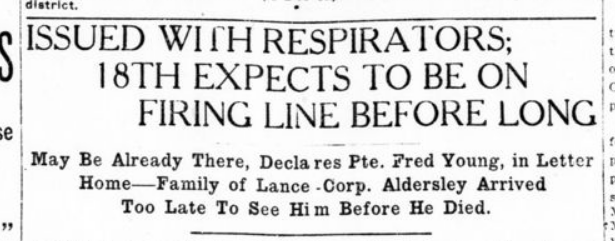
ISSUED WITH RESPIRATORS; 18th EXPECTS TO BE ON THE FIRING LINE BEFORE LONG
May Be Already There, Declares Pte. Fred Young, in Letter Home – Family of Lance-Corporal Aldersey Arrive Too Late To See Him Before he Died.
Indication of an early departure for France, a departure that may have already taken place, are suggested by Bandsman Fred Young of the 18th Battalion in his weekly letter home.
Writing from Sandling Camp, under the date of August 27, he declares that the 18th has already been issued with respirators for the use against the German gases, and suggest that possibly before the time the letter reached London the 18th would be in France.
He refers to the general regret expressed by the London member of the popular battalion, at the death of Lance-Corp. Alf. Aldersley. It will be remembered that his wife and family left London on the very day that he was reported seriously ill by the Canadian war office. Mrs. Aldersley was handed the telegram just before she left for the station.
According to the letter of Pte. Young she arrived too late to see her husband before he died.
The letter follows:
Good Weather for Manoeuvres.
Sandling
En Route to Berlin. Aug. 27, 1915.
There have been times since our arrival in England that the weather man has been decidedly unpopular, but during the four days’ Manoeuvres and bivouac of the 2nd Canadian Division, he sure did his best for the boys. Days of bright sunshine were followed by nights of twinkling starlight, and accounted largely for the success of the operations.
The end of the first day’s march found us in a large park, through which hundreds of deer fled precipitously at our approach. After supper, in which the “soup kitchens” demonstrated their practical value to an army on the march, the boys were ordered to prepare to attack. Promptly at midnight the columns moved silently from camp, and at daylight were till chasing the ever-yielding foe. A short halt for breakfast, and the successes were followed during the day.
Arrival of the Mail
At night we encamped in a large meadow, whose sloping sides formed a valley in the centre, through which a running brook flowed making a ideal bivouac. Waterproofs and blankets were spread, and preparations made for a much-needed rest, when the bugle announce to arrival of the Canadian mail. We were near the town of Ashford, and visitors from that burg, who were watching operations from the roadside, became genuinely alarmed as the boys rushed to flock around their platoon orderly sergeants. Probably they dreaded another Zeppelin raid, for they breathed a sigh of relief when the explanations were made. As the boys sang “Annie Laurie” around the camp fire that night, each man, no doubt mentally pictured loved ones in far off Canada, and who shall say that their hard bed on the bosom of Mother Earth was not made to feel easier by the knowledge that all was well at home.
The infantryman’s reveille call of “Open your eyes” is seldom greeted with cheers, but the musical note of the trumpeters of the heavy artillery, as they sounded “Stables,” were a real treat to the men who opened their eyes on a scene long to be remembered. Battalions of infantry, squadrons of calvary, and batteries of heavy artillery, all fully prepared for war, occupied the slopes and the valley, while flocks of sheep grazed contently in the part of the meadow unoccupied by troops, horses or guns.
No Confusion – Quick Action.
“Military precision” takes on added significance as one sees every man, horses and gun, moved quickly into line of march, without the slightest confusion, by a few shorts notes on a bugle, and quick words of command by officers in charge.
A route march took us into Ashford where an object lesson in “billeting” was given the troops and before night [fall] we were all back into our “camp” of the previous night, when orders were given that we had to “fight” our way home the following day.
The 18th Battalion Band was the only band in our section of the division and did good work in enlivening the camp in the twilight hour by martial music.
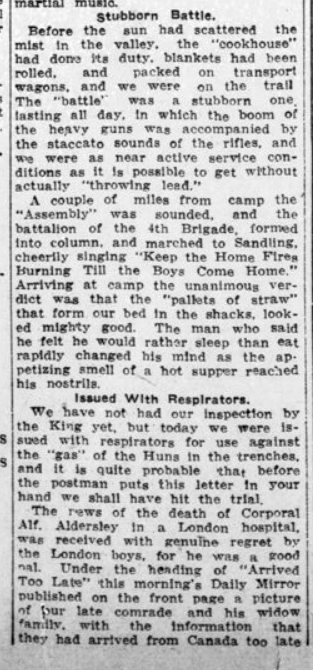
Stubborn Battle
Before the sun had scattered the mist in the valley, the “cookhouse” had done its duty, blankets had been rolled, and packed on transport wagons, and we were on the trail. The “battle” was a stubborn on lasting all day, in which the boom of the heavy guns was accompanied by the staccato sounds of the rifles, and we were as near active service conditions as it is possible to get without actually “throwing lead.”
A couple of miles from camp the “Assembly” was sounded, and the battalion of the 4th brigade formed into column, and marched to Sandling cheerily singing “Keep the Home Fires Buring Till the Boys Come Home.” Arriving at camp the unanimous verdict was that the “pallets of straw” that form our bed in the shacks, looked might good. The man who said he felt he would rather sleep than eat rapidly changed his mind as the appetizing smell of a hot supper reached his nostrils.
Issued with Respirators
We have not had our inspection by the King yet, but today we were issued with respirators for use against the “gas” of the Huns in the trenches, and it is quite possible that before the postman puts this letter in your hand we shall have hit the trail.
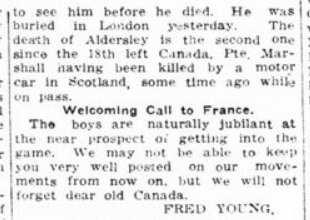
The news of the death of Corporal Alf. Aldersley in a London hospital, was received with genuine regret by the London boys, for he as a good pal. Under the heading of “Arrived Too Late” this morning’s Daily Mirror published on the front page a picture of our late comrade and his widow family with the information that they had arrived from Canada too late to see him before he died. He was buried in London yesterday. The death of Aldersley is the second one since the 18th left Canada, Pte. Marshall having been killed by a motor car in Scotland, some time ago while on a pass.
Welcoming Call to France
The boys are naturally jubilant at the near prospect of getting into the game. We may not be able to keep you very well posted on our movements from now on, but we will not forget dear old Canada.
FRED YOUNG
London Advertiser. 13 September 1915. Page 14.
Discover more from History of the 18th Battalion CEF, "The Fighting Eighteenth"
Subscribe to get the latest posts sent to your email.
 History of the 18th Battalion CEF, "The Fighting Eighteenth"
Excellent!!
Hi Eric,
I’m the great grandson of a veteran you have so kindly included on the 18thbattalioncef.blog website. I’ve noticed that the link included in his profile page to ‘find-a-grave’ is incorrect. Can you please tell me how I can provide information to correct this?
Thank you for all your hard work in honouring C-K’s heroes.
Mike
Mike, if you want to post it here that would be great. Or email me at ebd.edwards [at] gmail.com. Or join the 18th Battalion Facebook Group and message me there. https://www.facebook.com/groups/18thbattalioncef