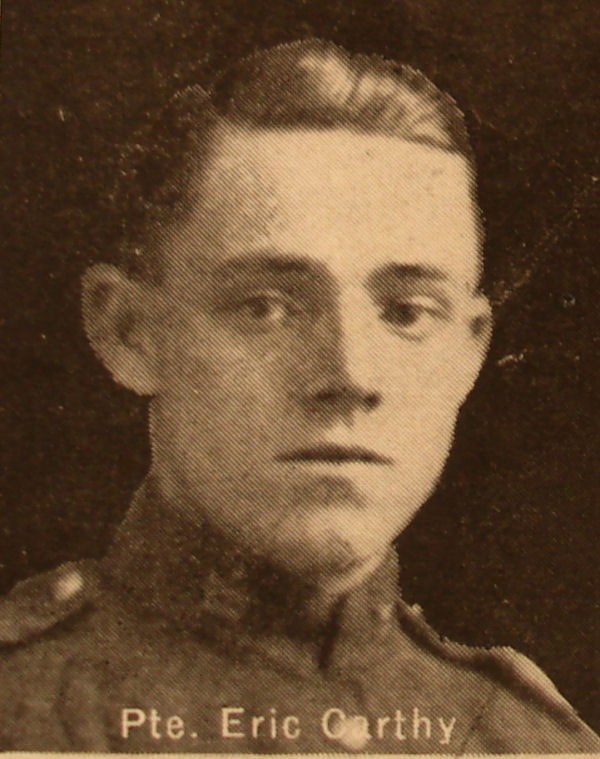
Family Search: When Private Eric Carthy was born on 13 March 1896, in Ashton Under Lyne, Lancashire, England, United Kingdom, his father, Joseph Carthy, was 27 and his mother, Harriet Boothby Hulme, was 32. He immigrated to Canada in 1913 and lived in Ashton-under-Lyne, Lancashire, England, United Kingdom in 1911 and Berlin, Waterloo, Ontario, Canada in 1915. He registered for military service in 1915. In 1915, at the age of 19, his occupation is listed as woodworker in Berlin, Waterloo, Ontario, Canada. He died on 26 December 1915, in Ieper, West Flanders, Belgium, at the age of 19, and was buried in Voormezele, Ieper, West Flanders, Belgium.
It’s dark on Boxing Day when Eric makes his way toward a forward trench to replace other soldiers. A tired soldier passes him by, leaving the muddy trench. The soldier is carrying out a plank of wood that he’s been using as a mat. This is careless. The enemy, entrenched on the other side of no man’s land, sends up a flare that catches the white wood in its glare. Suddenly, the Germans have a target. They turn a machine gun on it.
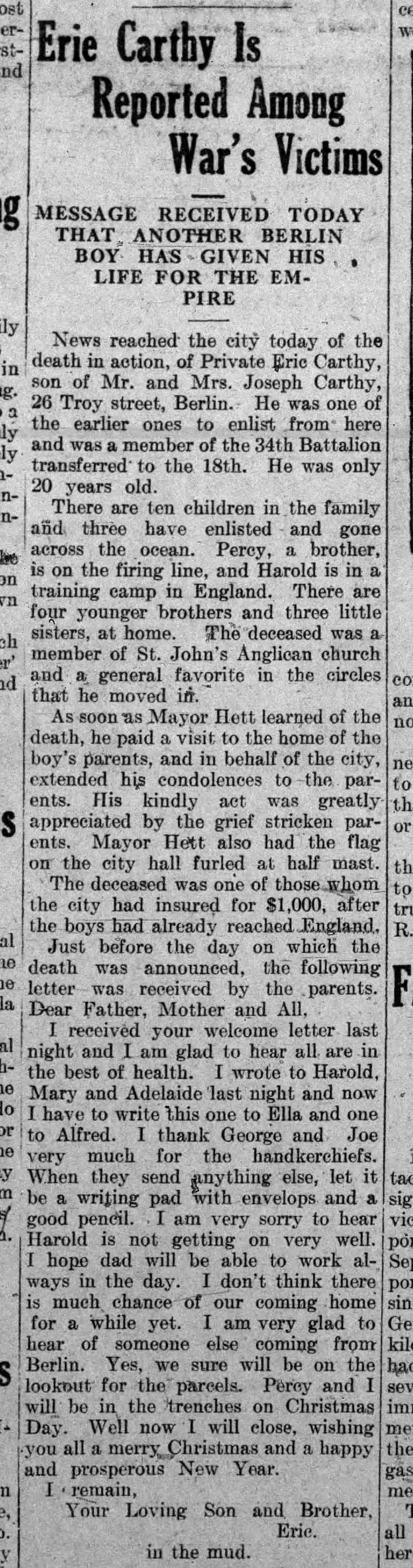
Eric never knows what hit him. “He never suffered at all as it was instant,” Percy [Carthy] writes the next day to their parents.
Percy doesn’t see his brother killed. He’s told that Eric has been wounded and that he can go see him. He gets there expecting to see his brother alive, but stretcher-bearers have already carried Eric’s body into an underground dugout.
Eric is one of two 18th battalion men killed on Boxing Day. He’s buried Dec. 27 in a little cemetery behind the front lines. “It is a nice place,” Percy assures his parents. “I will look after the grave whilst I am able.”
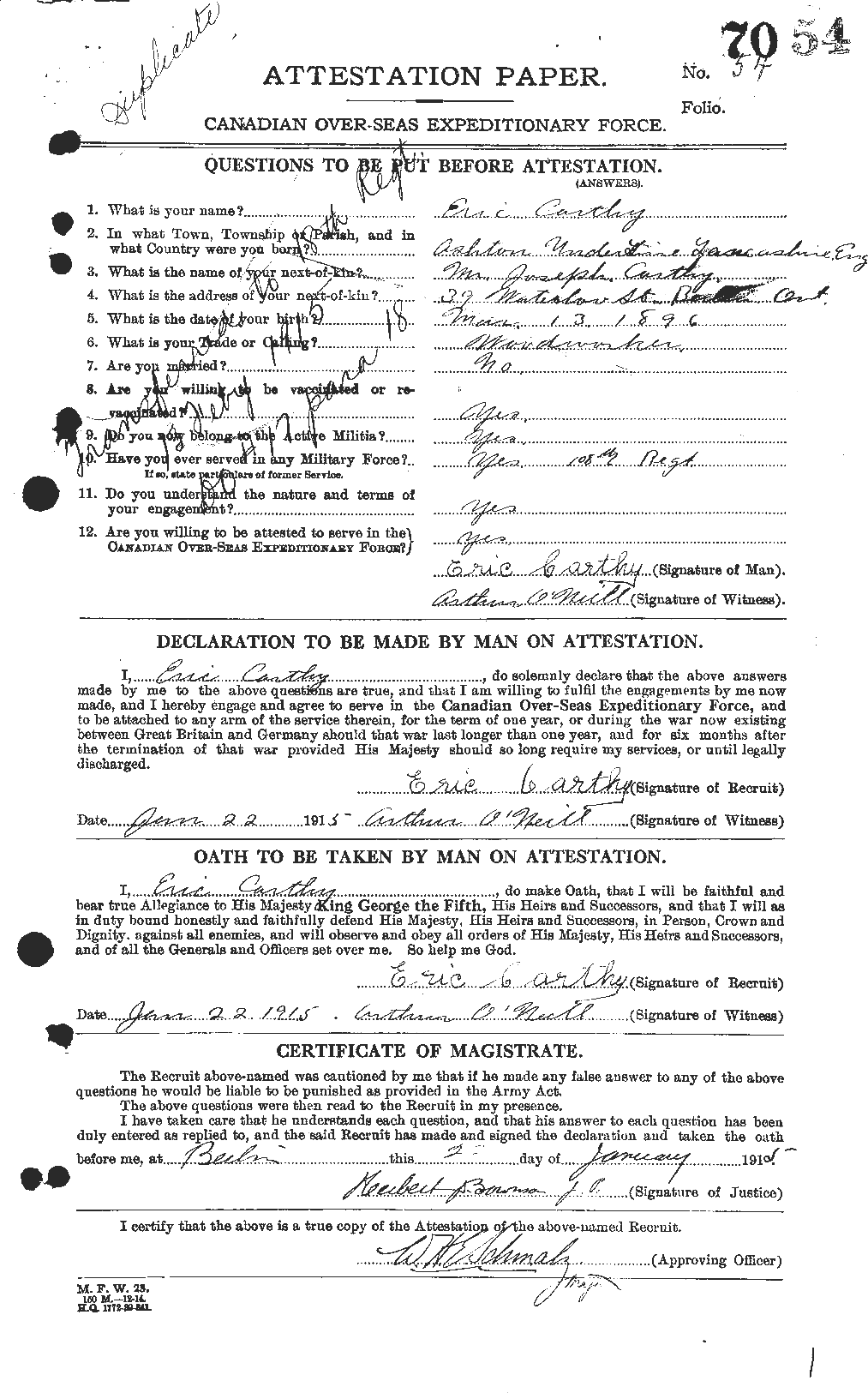
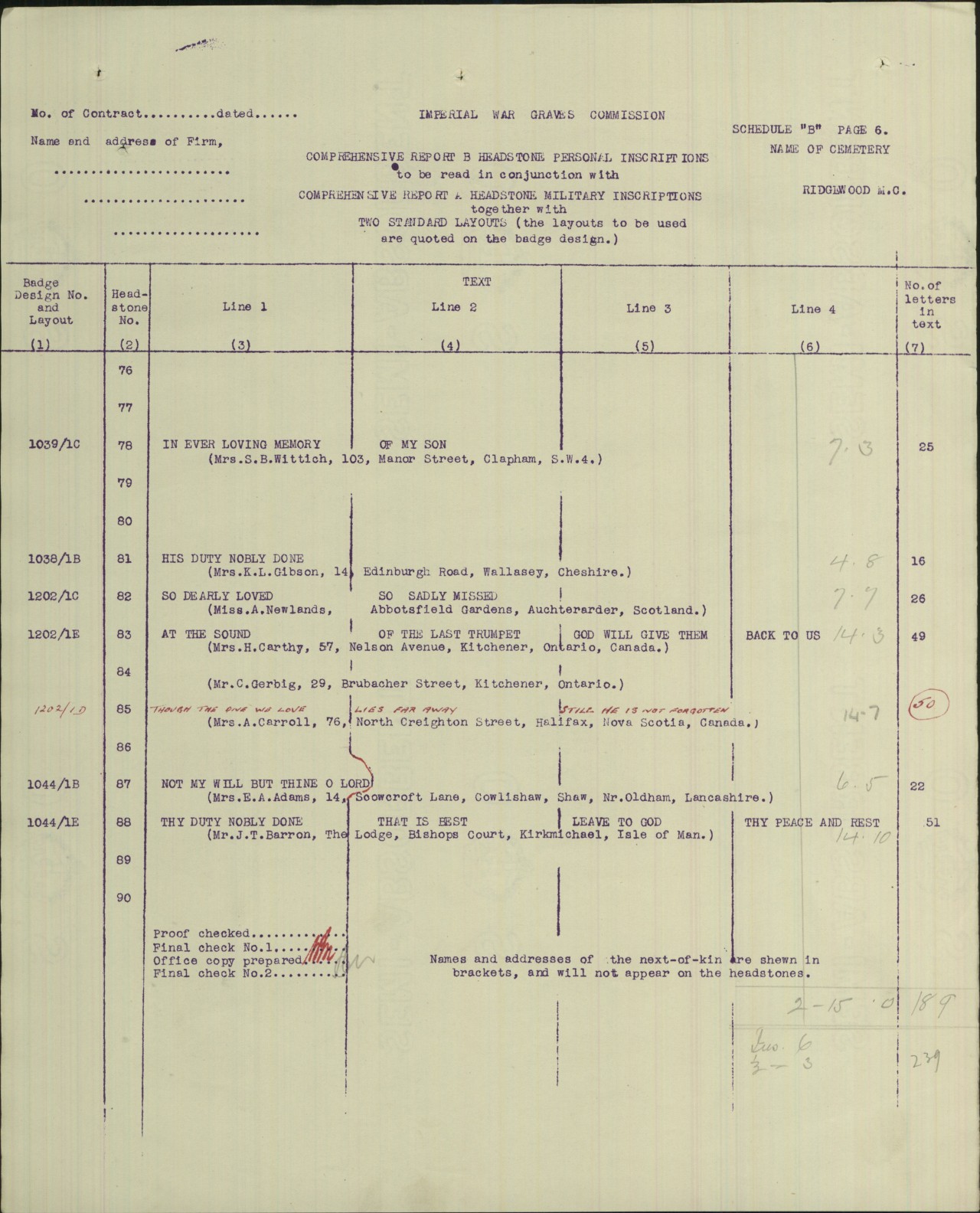
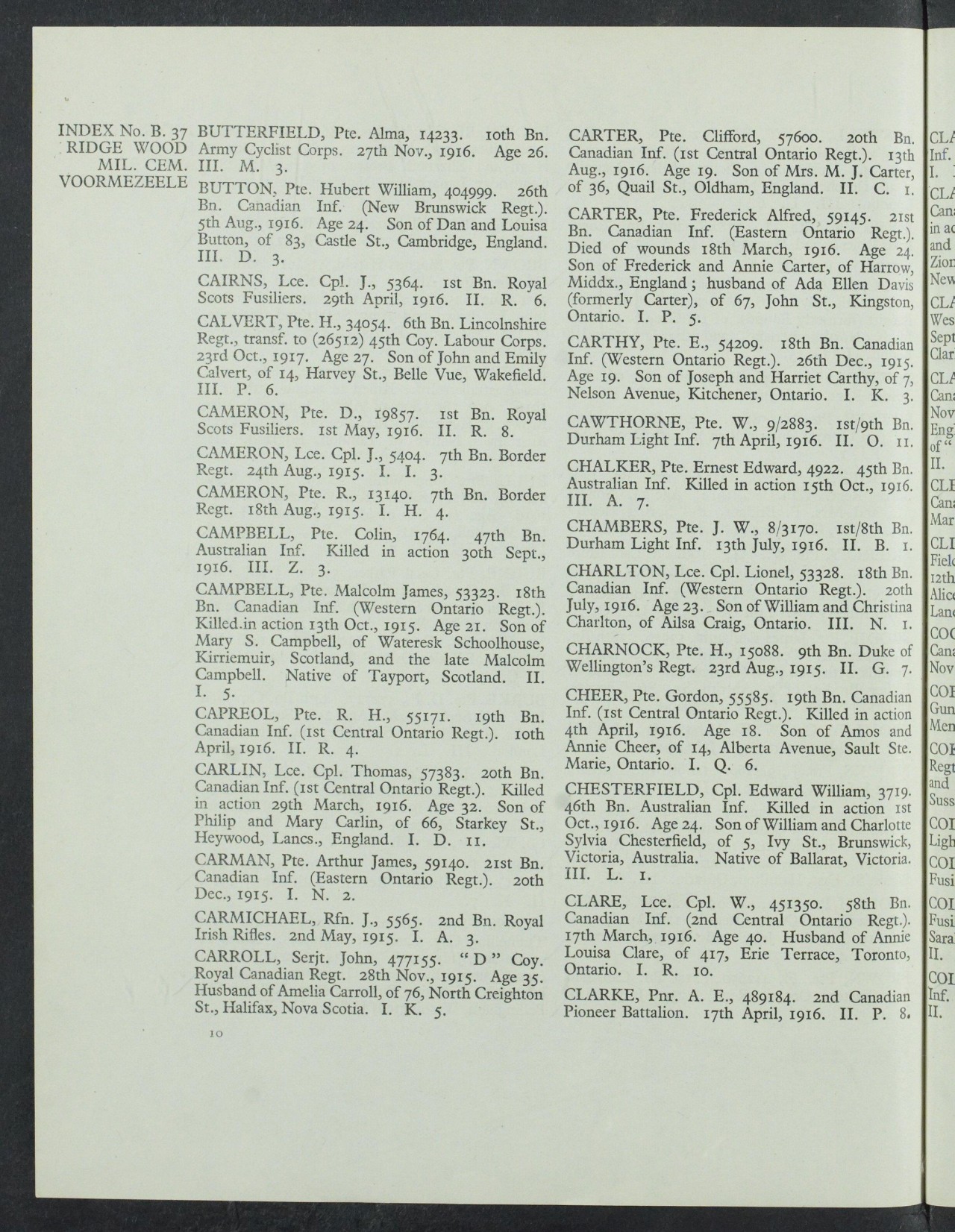
“Eric was born in Ashton-under-Lyne, Lancashire, England on March 13, 1896. He enlisted on January 22, 1915 at Berlin, Ontario and joined the 18th Battalion, Canadian Infantry, Western Ontario Regiment. Eric had worked as a woodworker.
Eric was the son of Joseph and Harriet Boothby Carthy of 39 Waterloo Street, Berlin, later of 277 Nelson Street, Kitchener.
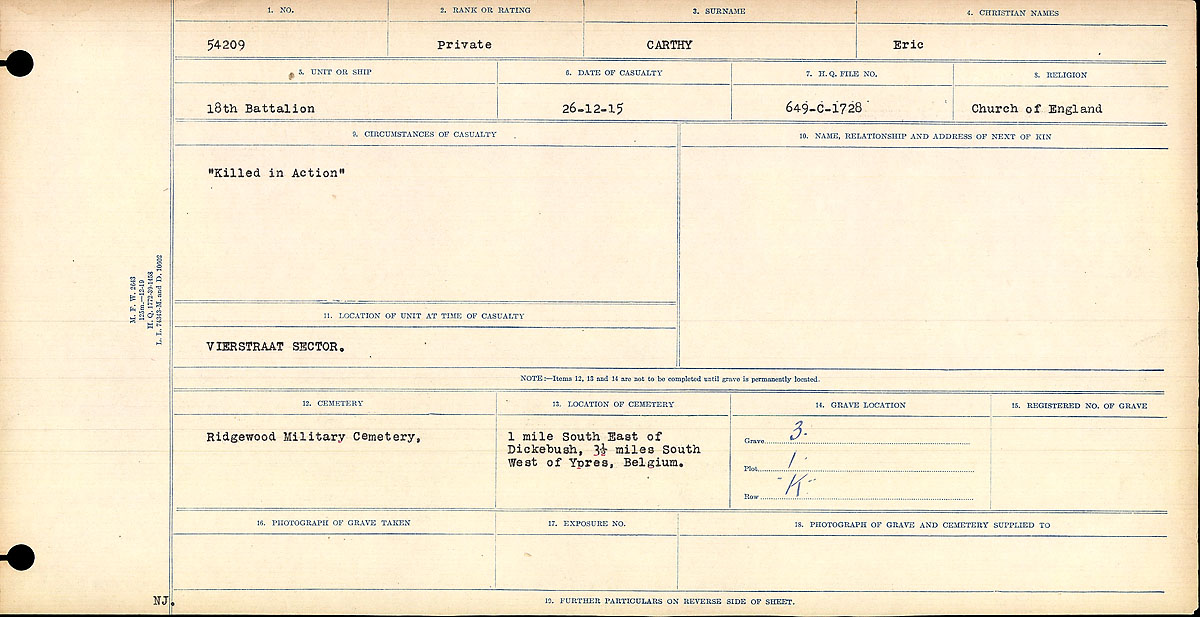
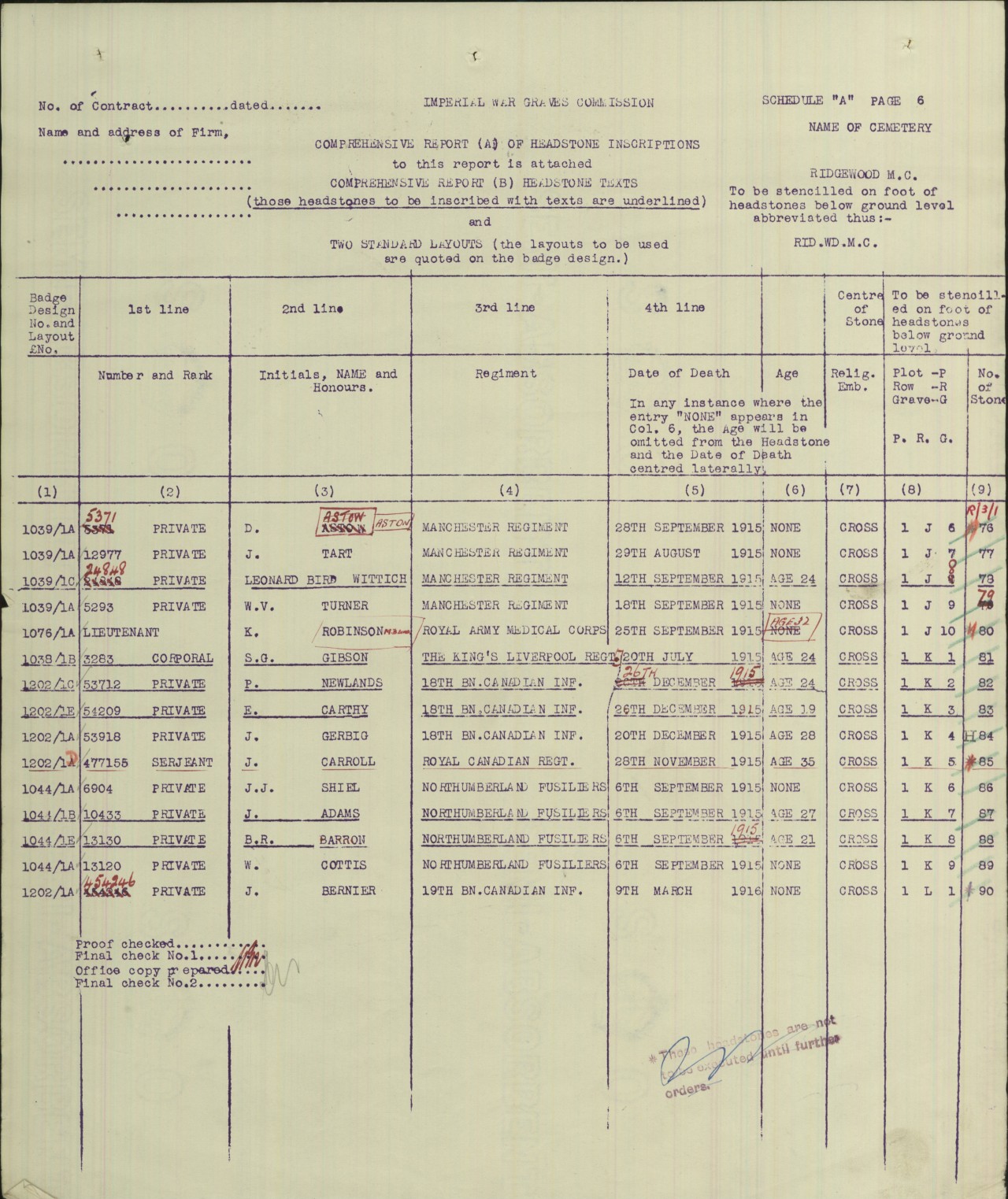
He went overseas in April 1915 and to the front on September 16, 1915. Eric was killed in action on December, 26, 1915 at the age of 19. Eric is buried at Ridge Wood Military Cemetery near Ypres, Belgium, grave 1.K.3. He is remembered by the Royal Canadian Legion, Ontario: Branch 50 – Fred Gies, Kitchener – Wall of Remembrance.
Eric is the brother to Percy who also served. Both were killed in action.”
Source: A Book of Remembrance: Members of the Church of St. John the Evangelist, Kitchener, Ontario.
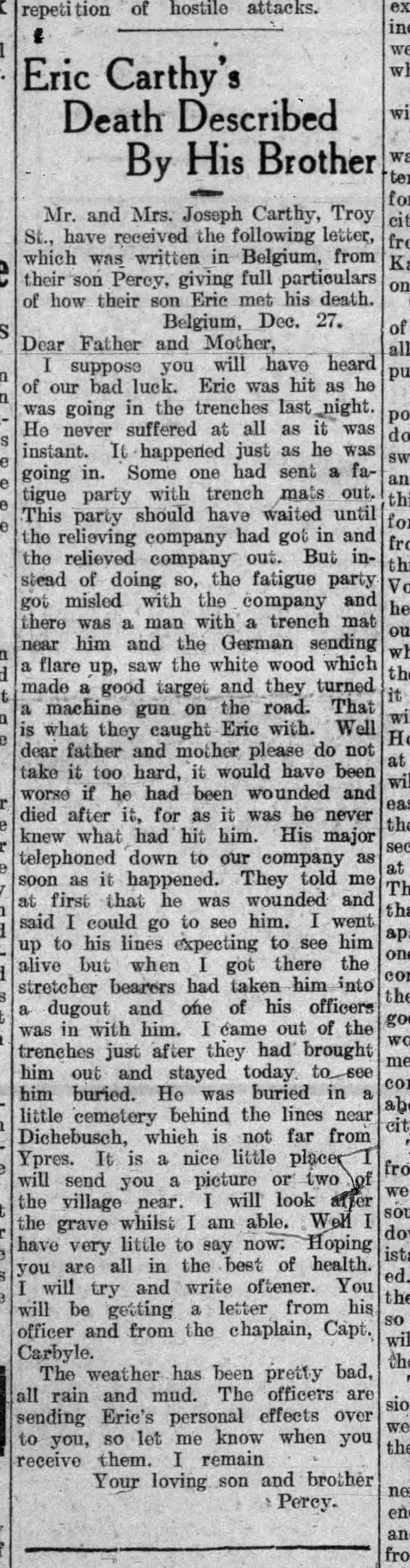
Eric Carthy’s Death Described By His Brother
Mr. and Mrs. Joseph Carthy, Troy St., have received the following letter, which was written in Belgium, from their son Percy, giving full particulars of how their son Eric met his death.
Belgium, Dec. 27. Dear Father and Mother,
I suppose you will have heard of our bad luck. Eric was hit as he was going in the trenches last night. He never suffered at all as it was instant. It happened just as he was going in. Some one had sent a fatigue party with trench mats out. This party should have waited until the relieving company had got in and the relieved company out. But instead of doing so, the fatigue party got misled with the company and there was a man with a trench mat near him and the German sending a flare up, saw the white wood which made a good target and they turned a machine gun on the road. That is what they caught Eric with. Well dear father and mother please do not take it too hard, it would have been worse if he had been wounded and died after it, for as it was he never knew what had hit him. His major telephoned down to our company as soon as it happened. They told me at first that he was wounded and said I could go to see him. I went up to his lines expecting to see him alive but when I got there the stretcher bearers had taken him into a dugout and one of his officers was in with him. I came out of the trenches just after they had brought him out and stayed today to see him buried. He was buried in a little cemetery behind the lines near Dichebusch, which is not far from Ypres. It is a nice little place; I will send you a picture or two of the village near. I will look after the grave whilst I am able. Well I have very little to say now. Hoping you are all in the best of health. I will try and write oftener. You will be getting a letter from his officer and from the chaplain, Capt. Carlyle.
The weather has been pretty bad, all rain and mud. The officers are sending Eric’s personal effects over to you, so let me know when you receive them. I remain
Your loving son and brother, Percy.
he Berlin News Record, January 15, 1916
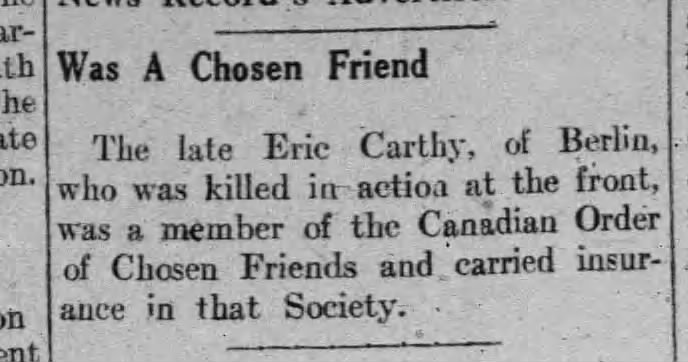
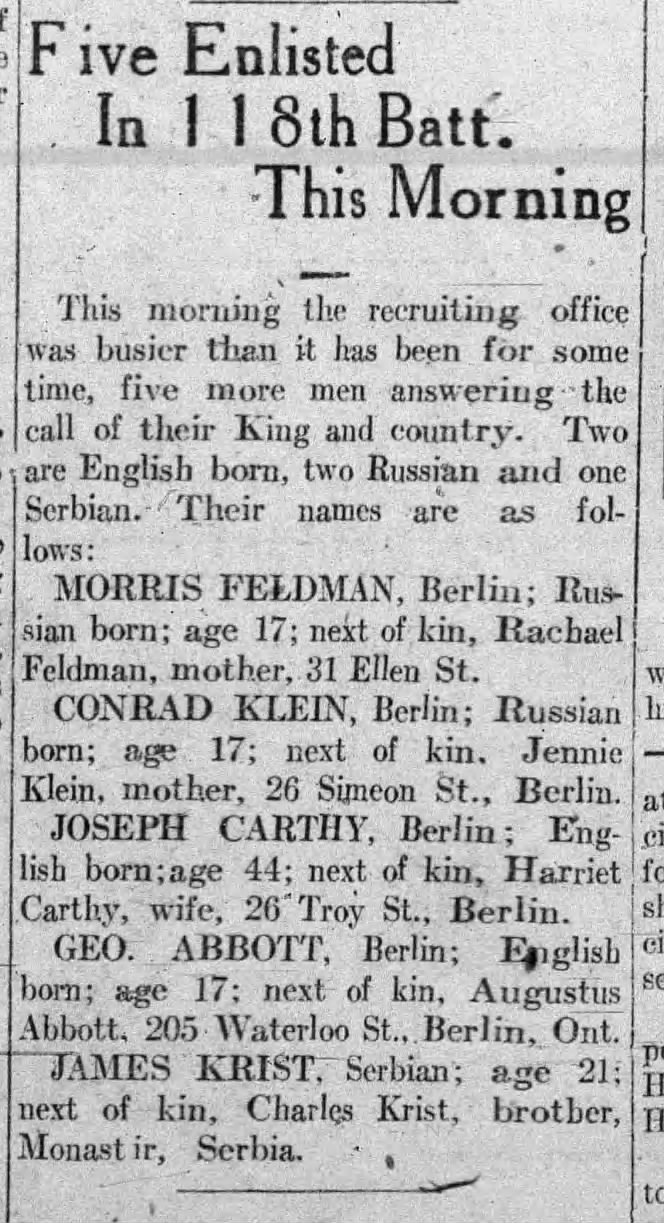
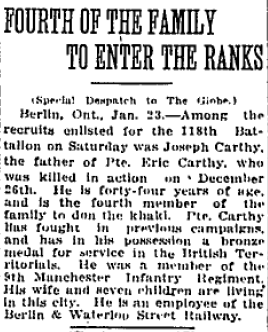
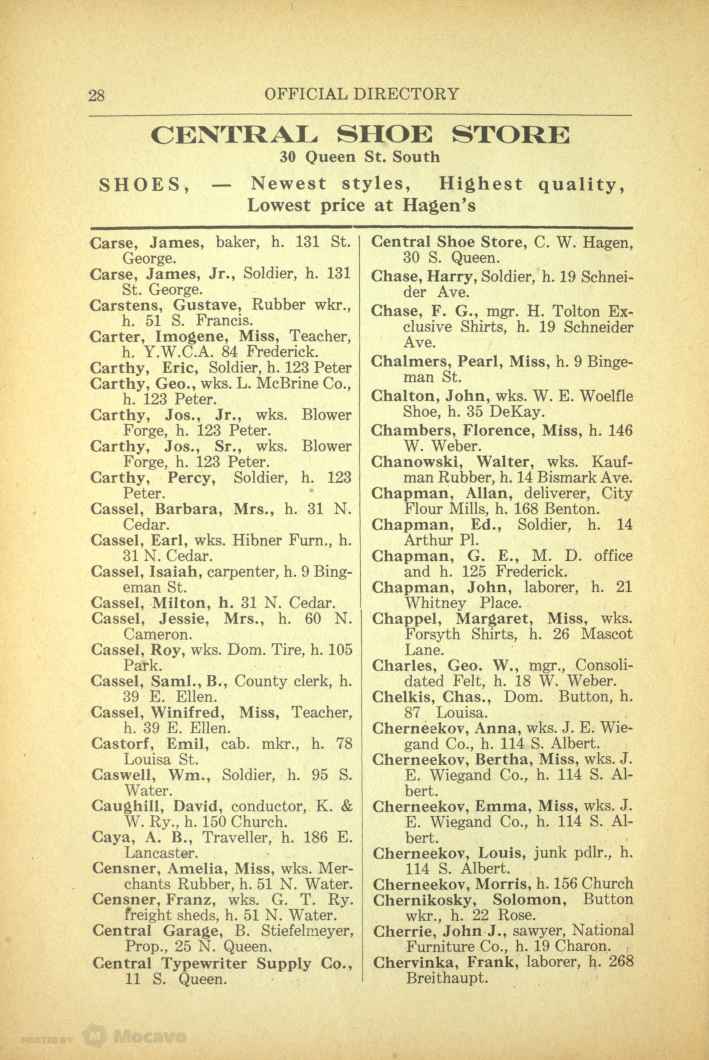
CVWM: Press Clipping – Source: The Globe, Toronto Thursday January 3 1916.CVWM: Press Clipping – Source: The Globe, Toronto Monday January 24 1916.Evening Chronicle 06 Jan 1916, Thu · Page 3.
“Killed in Action” Like so many of the 18th Battalion on that fateful day on the Somme.
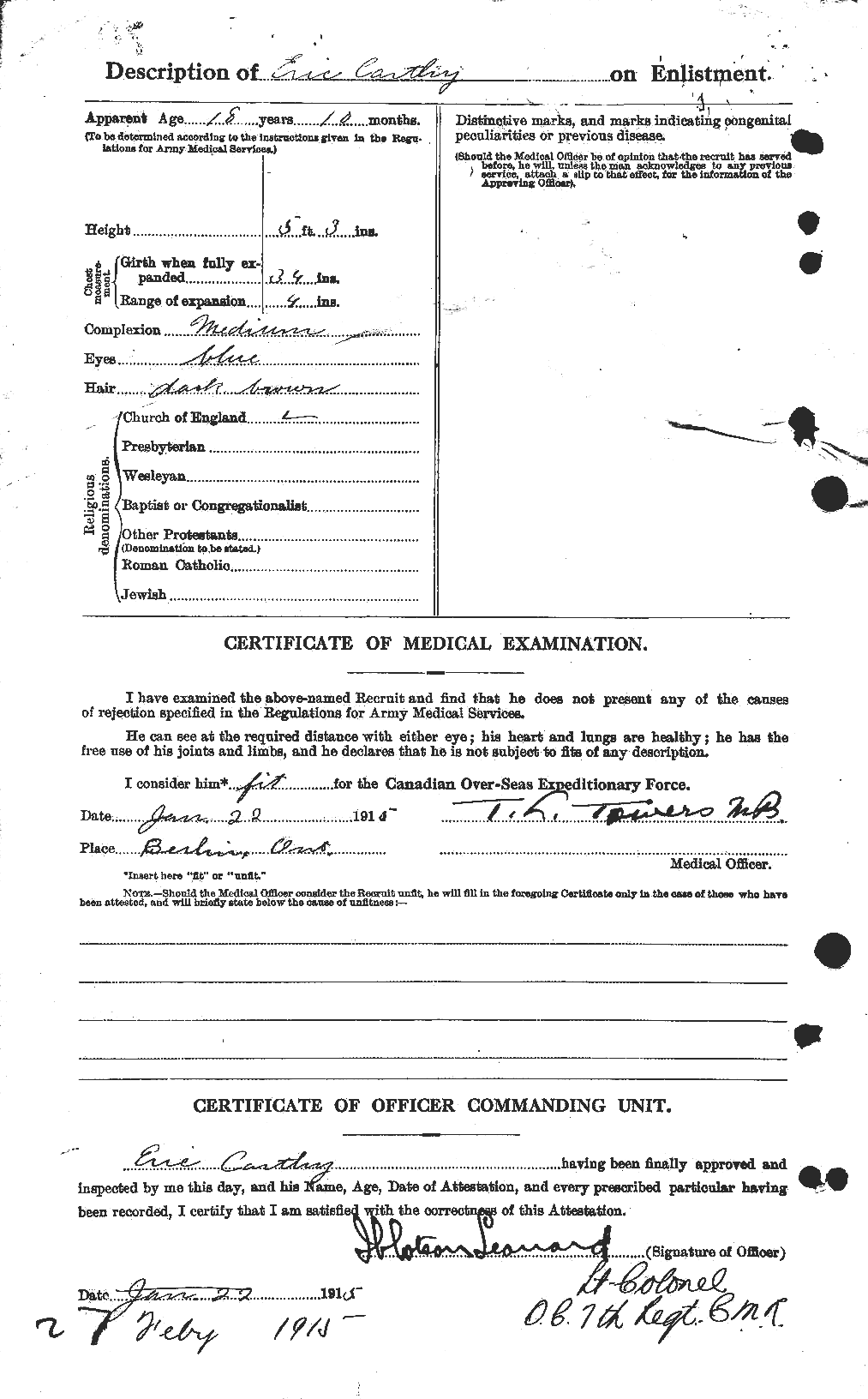
Consent form signed by parents and witnessed by another family member. He was 18 years old, 10 months when he volunteered.





 History of the 18th Battalion CEF, "The Fighting Eighteenth"