Source: 18th Battalion Nominal Roll, April 1915.
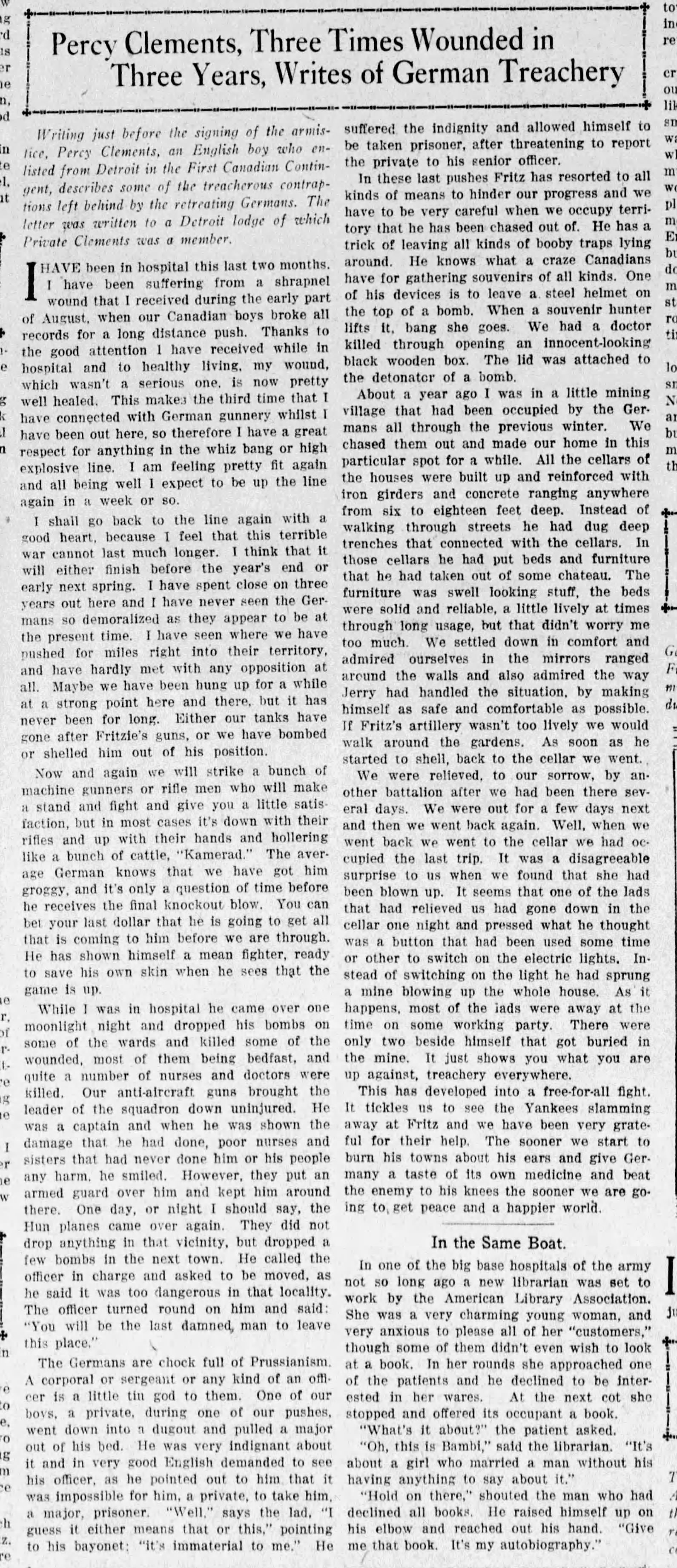
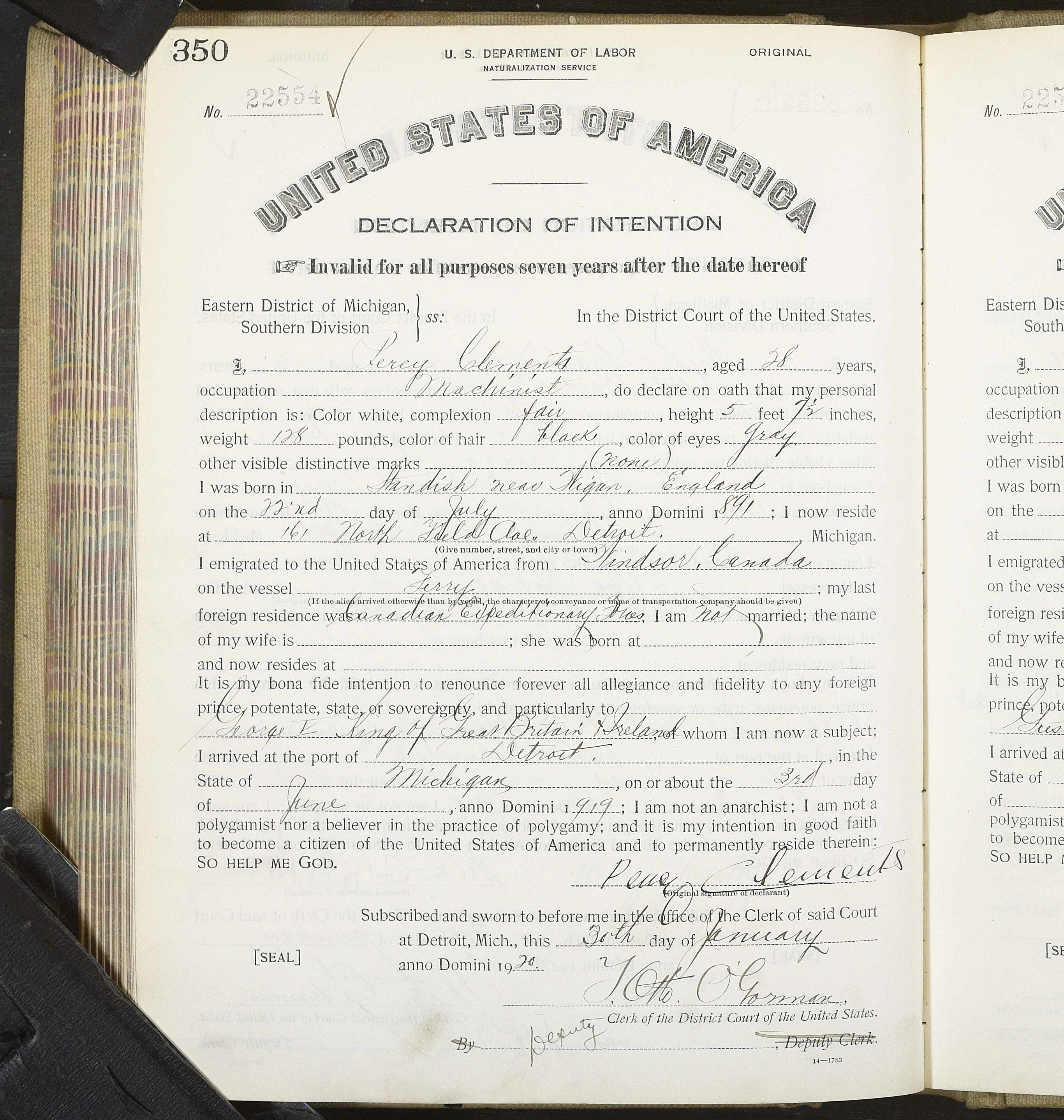
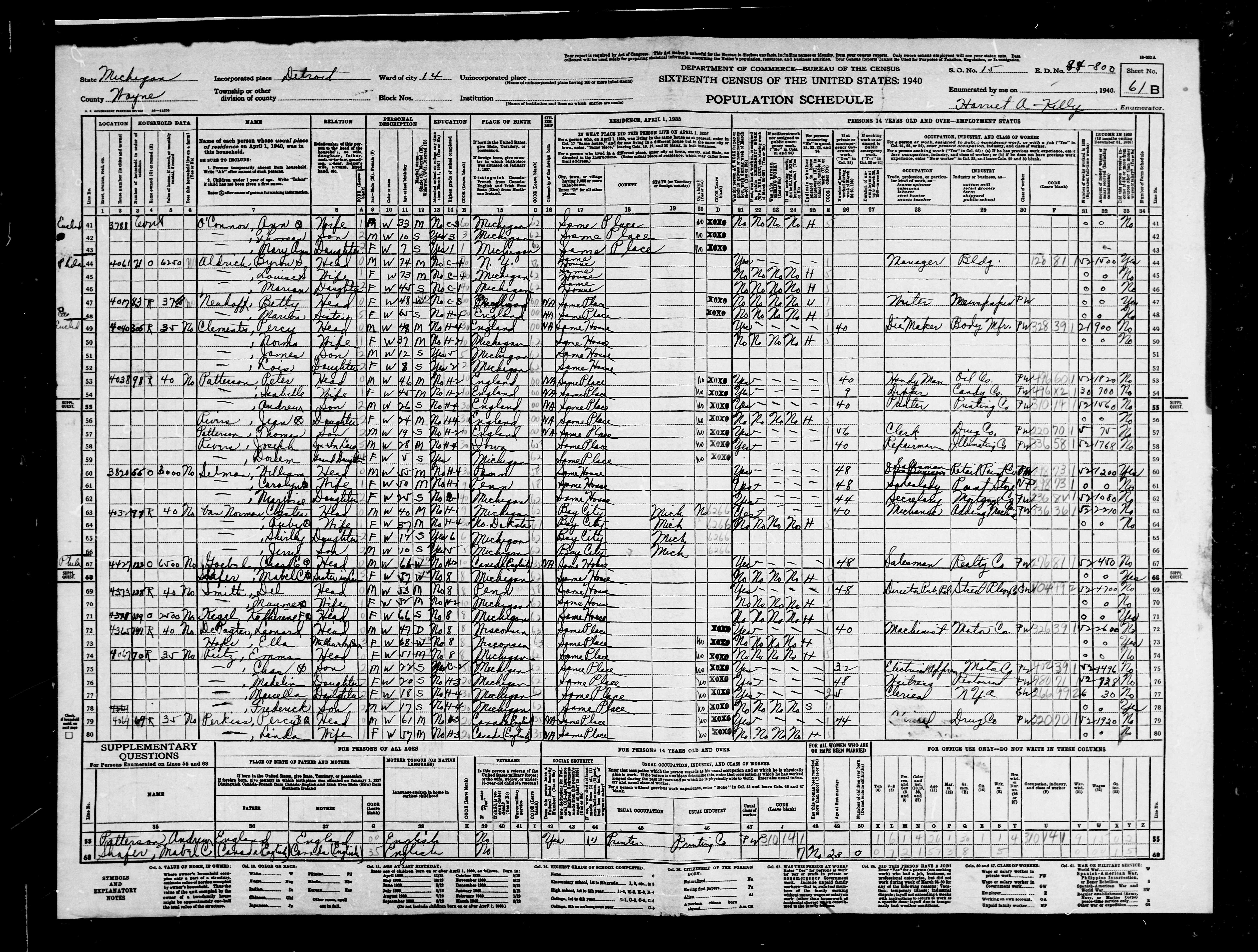
Family Search: When Private Percy Clements was born on 22 July 1891, in Standish, Greater Manchester, England, United Kingdom, his father, James Clements, was 19 and his mother, Alice Hunt, was 18. He married Norma A. Griffin on 6 May 1925, in Detroit, Wayne, Michigan, United States. They were the parents of at least 1 son and 1 daughter. He lived in Bolton le Moors St Peter, Lancashire, England, United Kingdom in 1911 and Detroit Ward 14, Detroit, Wayne, Michigan, United States in 1940. He registered for military service in 1914. In 1914, at the age of 23, his occupation is listed as machinist in Detroit, Wayne, Michigan, United States. He died on 1 December 1966, in Detroit, Wayne, Michigan, United States, at the age of 75, and was buried in Acacia Park Cemetery, Beverly Hills, Southfield Township, Oakland, Michigan, United States.

DETROIT BOY
TELLS OF LIFE
IN LONDON CAMP
Private Clements, 18th Battalion,
Writes Interesting Letter Home
From Queen’s Park.
READY TO MEET
THE ENEMY NOW.
Nothing Can Prevent British From Com-
ing Through War With Flying
Colors.
The Detroit Journal says:
A letter full of interesting details and
human touches from the training camp at
Queen’s Park comes from Percy Clem-
ents, a young Englishman, who is a mem-
ber of the Imperial Lodge of the Sons of
St. George. The Imperial is one of the
Detroit lodges of this organization, which
is composed of men of English birth or
extraction. Mr. Clements writes to Sec-
retary Moore, of Imperial Lodge.
Mr. Clements is a son of Mr. and Mrs.
James Clements, 15 Rose street, Bolton,
England, and is not married. He enlist-
ed in the second Canadian contingent at
Windsor on November 2. He is attached
to “B” Company, 18th Battalion, sta-
tioned in Queen’s Park, London, Ont.
In his letter Mr. Clements says he
gladly gives a few of his experiences
and observations as a British soldier
for the information of his lodge brothers,
saying:
“To begin with, we are a big, happy
family here. All the boys, after the three
months’ hard training, are in the best of
condition, ready to meet anything from
a good feed to a charge of cavalry. Here
we are under the strictest discipline, but
at the same time we have all the sport
we need, for when we are off duty, of
course, any misconduct is severely dealt
with. We get the best of food-good,
substantial grub.
CANADIANS IN MINORITY.
“You will probably think by reading
the newspapers that they are, for the
biggest part, Canadians here. Nothing
of the kind. About 15 per cent. are Cana-
dians, the rest is made up of old country
English, Irish and Scotch. The biggest
part is English, I think. Quite a lot of
old soldiers who were in South Africa
are with us. Of course, we have quite a
lot of Americans with us, too.
“We are examined by a doctor every
so often. Any sign of disease is at once
treated. For instance, we had one mild
case of smallpox before Christmas. The
day it was discovered we happened to be
away at the ranges shooting, and only
returned after dark. As soon as we ar-
rived inside of the barracks the gates
were closed on us and we were quaran-
tined inside those gates for two weeks.
You bet we got pretty glum. The day
we got let out of quarantine they took
us out for a route march. As soon as
the gates were opened we let out such a
yell I am sure if we ever let out the
same yell any time we meet the Germans
they won’t need much licking.
“Two weeks ago we went 10 miles away
from here, full marching order, bivou-
acked for the night with the mercary
[mercury] 15 degrees below zero; no fires, just our
blankets-three each we had. We were
supposed to be right near the enemy,
and everything was just as we might
get it at the front. It was mighty cold,
I can tell you.
DANCE TO WARM UP.
“When we were supposed to be asleep,
we were found dancing all night to keep
warm. That morning and the morning
after I think were the only two mornings
we were glad to hear the rousing bugle
go. The day we came back to barracks
we had some skirmishing. No easy work
running over those hills knee deep in
snow, from early morning to nightfall.
Then we marched back to barracks, 10
miles distant. The only food we had was
our breakfast and a little soup at 1:30
a. m. We had a great supper when we
arrived at the barracks, all in, but every-
body happy.
“Whilst I have been here I have been
struck by one thing, and that is, noth-
ing can prevent us from coming through
this war with flying colors, and it is the
opinion of everyone here that there is
going to be a general cleanup by Eng-
land this spring.
“What part the 18th is going to play
remains to be seen. As it is, the boys
are impatient to see some of the real
stuff.”





 History of the 18th Battalion CEF, "The Fighting Eighteenth"