Source: Found during research for blog article about June 1917 sports day. 2nd place high jump after Laird. May have served 4th. M.G. Coy.
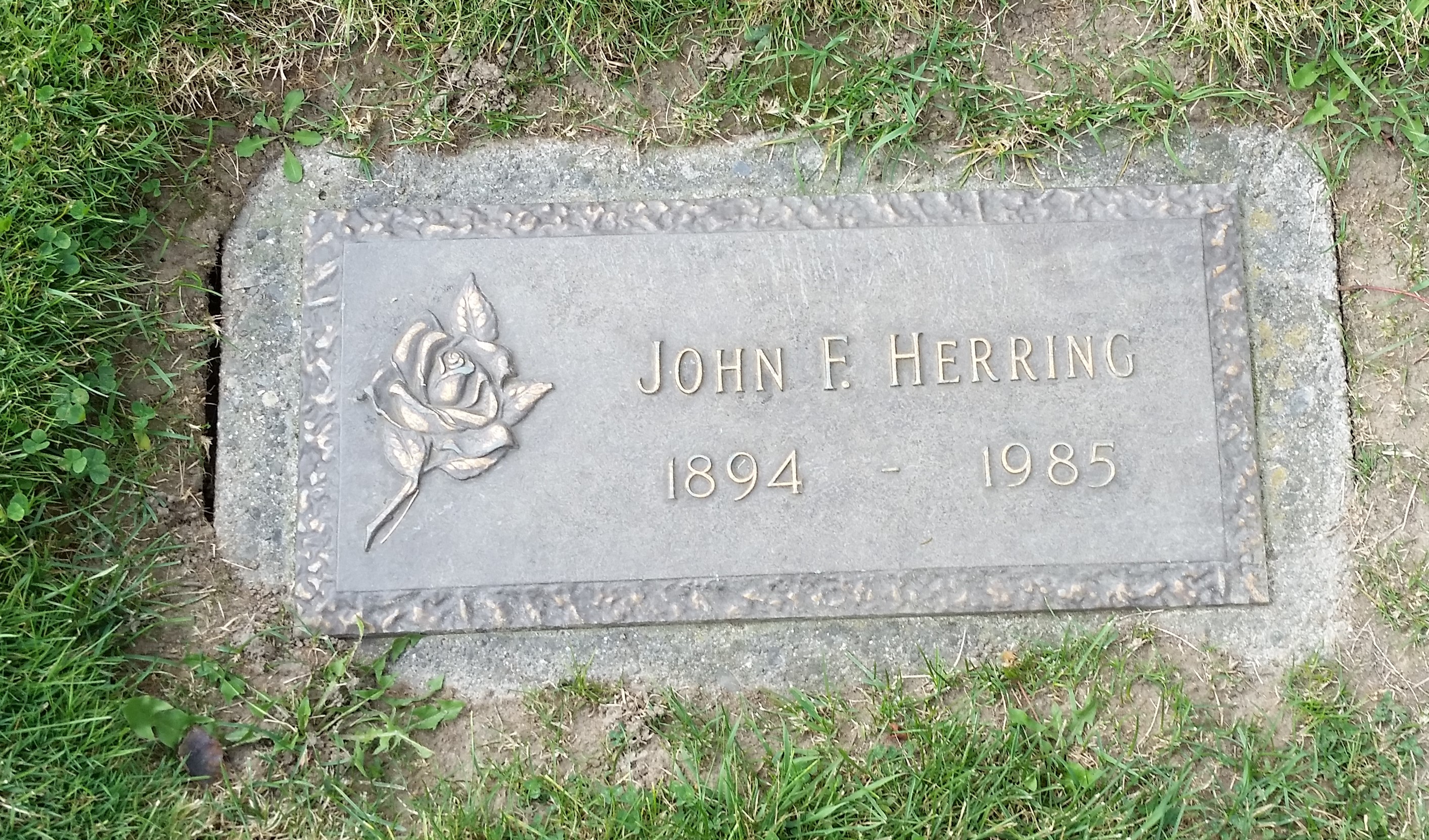
Family Search: Private John Frederick Herring was born on 29 December 1894, in London, England, United Kingdom as the son of Francis William Herring and Martha. He married Violet Rose Pierce on 2 April 1928, in London Township, Middlesex, Ontario, Canada. He immigrated to Canada in 1913 and lived in Middlesex, England, United Kingdom in 1901 and London, Ontario, Canada in 1919. He registered for military service in 1909. In 1914, at the age of 20, his occupation is listed as farm labourer in London, Ontario, Canada. He died in 1985, at the age of 91, and was buried in Forest Lawn Memorial Gardens, London, Ontario, Canada.
Sadly, though this man married in England, his wife, Elsie, died during her voyage to Canada. He would remarry in 1928, and one of his children from that union was named Elsie. Per Annette Fullford via Twitter @avidgenie.
Note that this soldier shows up in the 1915 April Nominal Roll under the reg. no. of 53499 or 53199. Difficult to read from the digital copy in my possession.
John Frederick Herring was born in London, England in 1894, the son of Francis William Herring and Martha Bull. His mother died when he was 4 years old and his father remarried a few years later.
John came to Canada at 18 years old in 1912 to work as a farm labourer in Woodstock, Ontario. In October 1914, he enlisted with the 18th Battalion in London, Ontario.
While overseas he was wounded by shrapnel in his right ankle in September 1916. His wounds healed and had no disability except a scar about the size of a quarter near his ankle.
He was granted permission to marry in June 1918 while he was stationed at Witley camp in southern England. John F. Herring married Elsie Florence Ancrum at St. Matthew’s Church, Moorefields, in Bristol on August 19, 1918. Elsie was born in Bristol in 1892 to Arthur Ancrum and Emily Brown.
John was transferred to the Buxton Discharge depot in January 1919 to await available shipping to Canada. John and Elsie travelled together to Canada on the Metagama in February 1919, but sadly she died before they reached Canadian shores. She was only 27 years old.
Evening Times and Star February 17, 1919 p2
“Last night Mrs. Herring, who was coming home with her husband, Sergeant Herring of Walkersville, Ontario, passed away.”
Her husband’s service record confirms that she died on board. The passenger manifest for the Metagama says she died on the 16th, a day before they landed. The military stopped her separation allowance only a couple of days after she died. There is a burial permit in New Brunswick where they landed, so she wasn’t buried at sea. It says she died from Pulmonary Infarct (or embolism). A tragic end for a war bride who never had the chance to start a new life in Canada. She is buried at the Fernhill Cemetery in Saint John, N.B.
John Herring remarried in 1928 in London, Ontario to Violet Rose Pierce. They had two girls; Kathleen and Elsie. He died in 1985 in London, Ontario.
Source: “Some of Our Boys Home on the S.S. Metagama.” Evening Times and Star, February 17, 1919, page 12
Contributed by Annette Fulford, via the 18th Battalion Facebook Group.
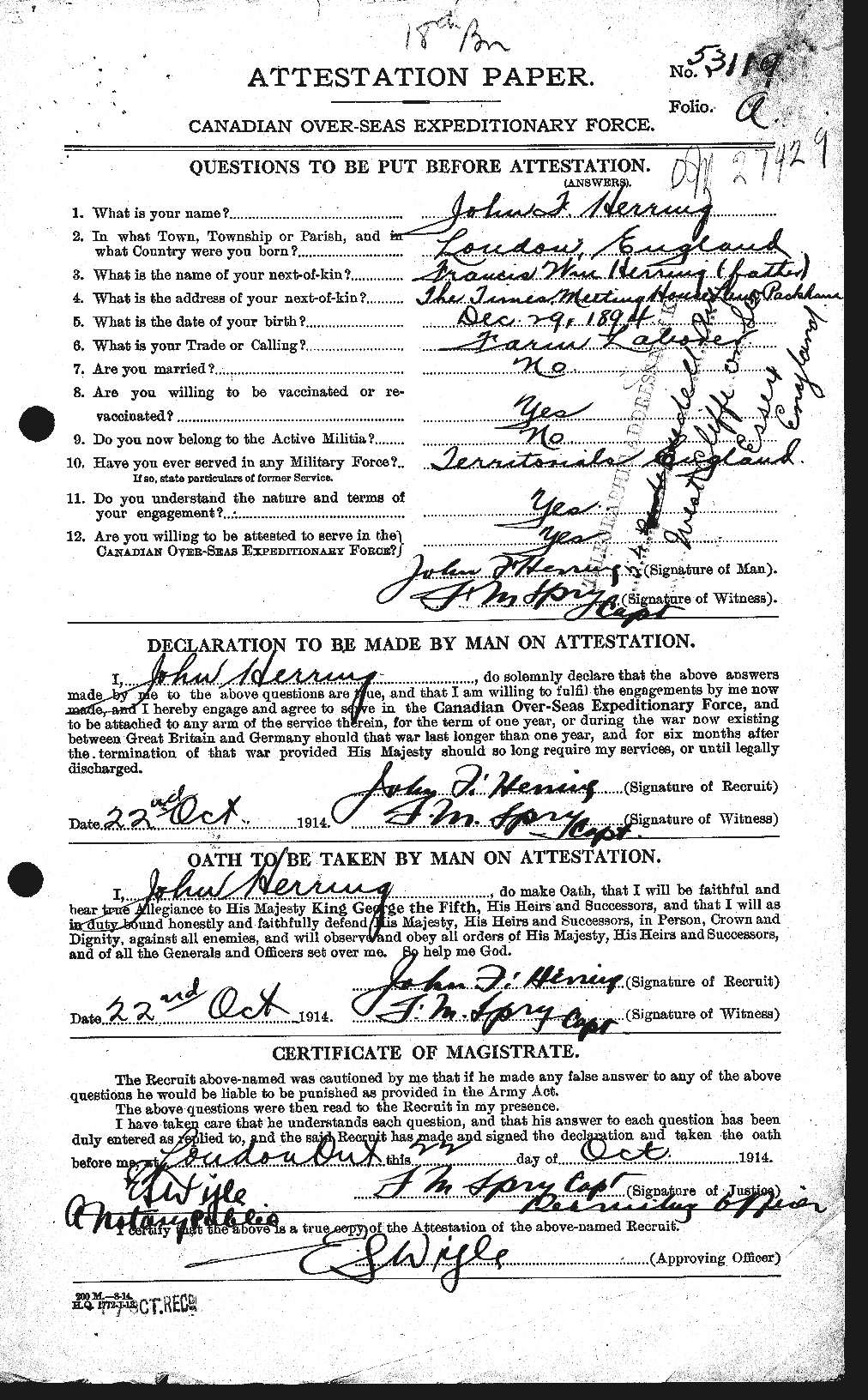
Private John Frederick Herring, reg. no. 53119.
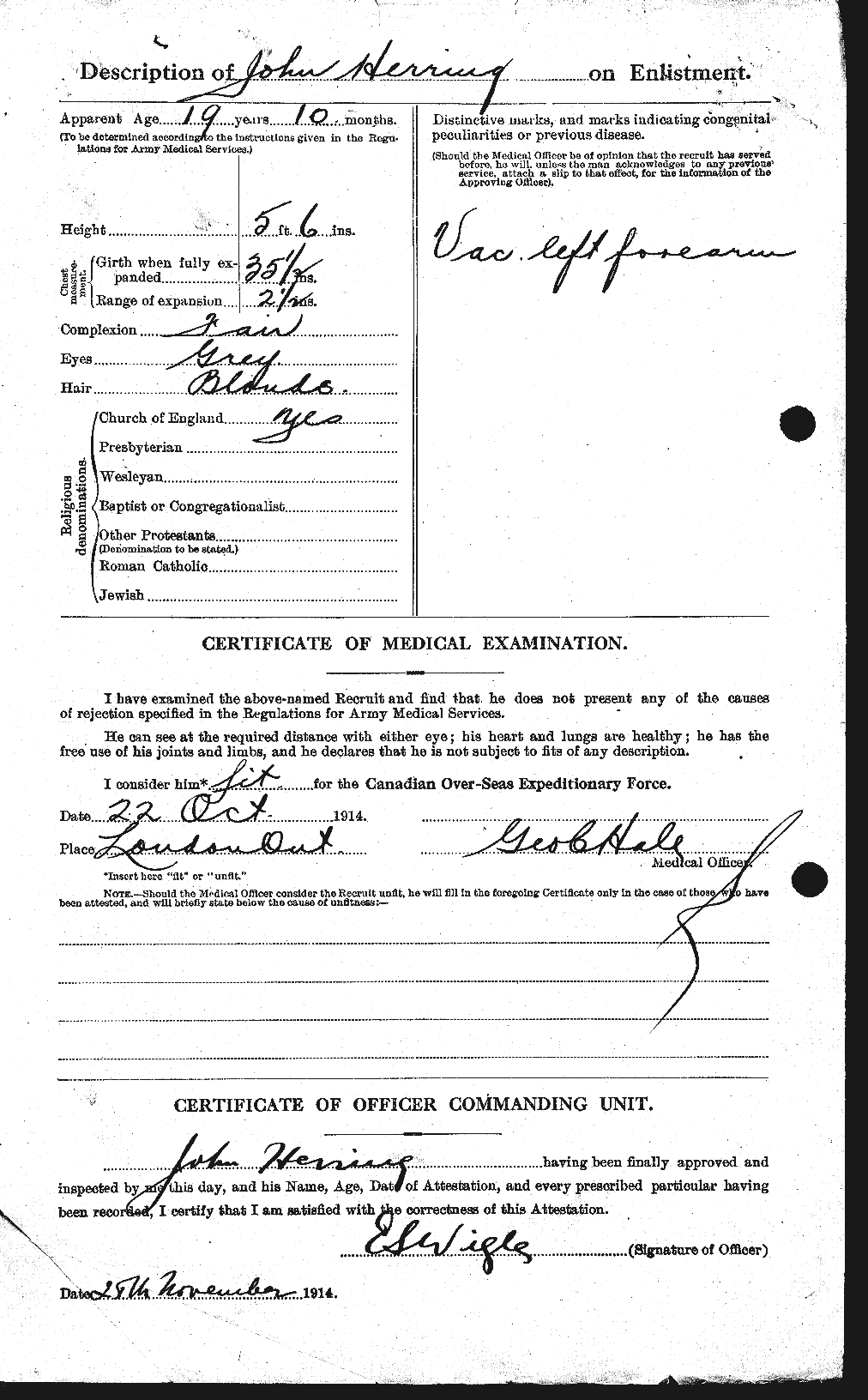
This man enlisted with the 18th Battalion on 22 October 1914, at London, Ontario. He was a farm labourer and had prior military experience with the British Territorials. He practiced the Anglican faith.
After training in London, Ontario (October 1914 – April 1915), he, along with the rest of the 18th Battalion, embarked on the SS Grampian at Halifax, Nova Scotia and arrived at Avonmouth, England,d on 29 April 1915.
His service overseas began with the 18th Battalion arriving in France on 15 September 1915 and entraining, then marching to the Ypres Sector of the Belgian Front.
He was sentenced to 3 days Field Punishment No. 1 on 5 May 1916 for being “Absent from Parade”.
With a case of synovitis of the knee, Private Herring was sent to No. 4 Canadian Field Ambulance for treatment on 15 July 1916, returning for duty on 22 July 1916.
He suffered from a GSW to his right ankle and leg on 17 September 1916 and was sent to England for treatment after passing through No. 3 Canadian General Hospital, and he was transported to England aboard the H.S. St. Denis on the same day.
He was treated in England and recovered, returning for duty on 28 May 1917, arriving at No. 2 Canadian Base Depot at Etaples. HE was assigned to the 2nd Canadian Entrenching Battalion on 14 June 1917, but was diverted to the Canadian Corps School at Pernes, France on 16 June 1917/
On 11 October 1917, he became ill with a pyrexia of unknown origin and was sent to 58 Casualty Clearing Station, and was again sent to England for treatment, being transported on the A.T. St. Andrew on 15 October 1917.
He was posted from the 18th Battalion to the 4th Canadian Reserve Battalion at Bramshott and was to be an Acting Lance-Corporal with pay effective 26 January 1918.
He was then appointed at Acting Corporal with pay on 22 August 1918 and served in England until he was slated to return to Canada, being attached to CCD Buxton on 8 February 1919.
He was discharged due to demobilization on 8 March 1919, at London, Ontario.
He had married overseas, but his wife, Elsie, died during the voyage to Canada.

 History of the 18th Battalion CEF, "The Fighting Eighteenth"