With thanks to the family member who shared the diaries of Ernest Berry, this article would not have been possible.
Gainfully employed with a newborn baby boy barely one year old were not deterrents to Ernest Berry,[i] a bookbinder from Toronto, from enlisting for war. He loved his only son, calling his son Walter “Birdie” in the many cards he sent his young son, too young to read, perhaps intentionally so they would become paper touchpoints to show his son that he thought of him often and wanted to have these cards act as markers of remembrance and love during his long time away from his beloved family.
His ardour for his son is reflected in his entry on a form[ii] required to be completed once a battalion (or draft) had been informed of its impending departure for England. The now Private Berry wrote “Our boy” above the space to enter Walter’s name and age (18 months). This is a rare personalization of a government form filled out by thousands of soldiers who simply put the names and ages of their children. Yet, Berry felt the need to differentiate his son on an antiseptic bureaucratic form.
Enlisting on 3 January 1916 at Toronto with the 124th Battalion, this bookbinder began his journey towards war and active combat service with the 18th Battalion.
But before he would enter the, up to that time, World’s greatest conflict, he would entrain at the base at Camp Borden, Ontario, north of Toronto.
As the soldiers trained there was increased expectation that their training would prepare them for war and that its progress would signal the time when the battalions would prepare for embarkation on a ship to England for the next stage of their military service.
Private Ernest had no military experience before his enlistment so the experiences of close-quarter living with men bound by a common purpose would have been foreign to him. Like many of recruits and conscripts in the Canadian Expeditionary Forces, his commitment to service would be successful and he would, along with the vast majority of this battalion would head to the next stage of, what appears to be from Private Berry’s perspective at this time, a Grand Adventure.
He felt so strongly about this process that he decided to record his travels in a letter to his wife.
The series of “letters”, really diary entries, are not entirely unique. Several men of the 18th Battalion recorded their experiences, some in detail. They offer the opportunity to gauge the attitudes and beliefs of the men being transported across the Atlantic and they offer insights to their concerns, experiences, patriotism, and fears – the most common fear being German U-boats.
Private Berry is so excited to be leaving that he sends two postcards on 4 August 1916 from Camp Borden regaling her with the fact he is leaving. These postcards probably arrived within one or two days of posting, and one wonders how Elsie[iii] accepted the news of her husband’s impending departure to war.
The diary is produced in its entirety below. An attempt has been made to preserve some aspects of format and spelling. Explanations will be made with endnotes or explanatory notes below the following content.
R.M.S. Cameronia
Bramshott Camp
Aug 25/16
Dear Elsie,
I am going to try to write a diary of our trip since we left Camp Borden and I hope it will interest you.
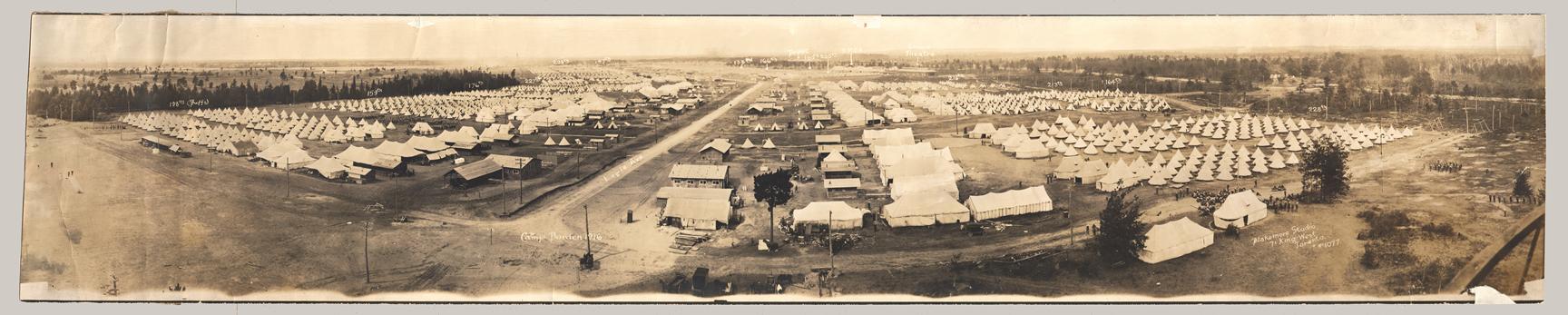
Friday Aug 4 Left Camp Borden at 3.30 PM arrived in N. Toronto 5.15 PM.[iv]
Saturday Aug 5 Arrived in Montreal 6 am. Arrived in Riviere Du Loupe at 6.30 PM went for a route march thru the town, which is mostly composed of Frenchies, they gave us a great reception. Left Riviere Du Loup at 8 P.M.
Sunday Aug 6th [illegible] at 5 am we were stopped at a place called Campbellton, New Brunswick we left there at 5.30 and didn’t stop again until we came to Moncton, Nova Scotia [sic], where a Town Band met us on the platform at the station and escorted us around the town, we left Moncton at 2 P.M. at 5 oclock we passed thru Amherst N.S. where the 123[v] of Toronto had been stationed for a week they lined the platform and gave us three cheers as we passed thru, just outside Amherst we saw the big German Detention camp. At 7 PM stopped at Truro N.S. were [sic] the people gave us a great welcome, as we left Truro, orders were [sic] given to draw the blinds, and all lights were put out and we had only to speak in whispers, so as to give it the appearance of empty coaches, on account of German Spies.[vi] We arrived in Halifax at 9 P.M we slept on the train all Sunday night.
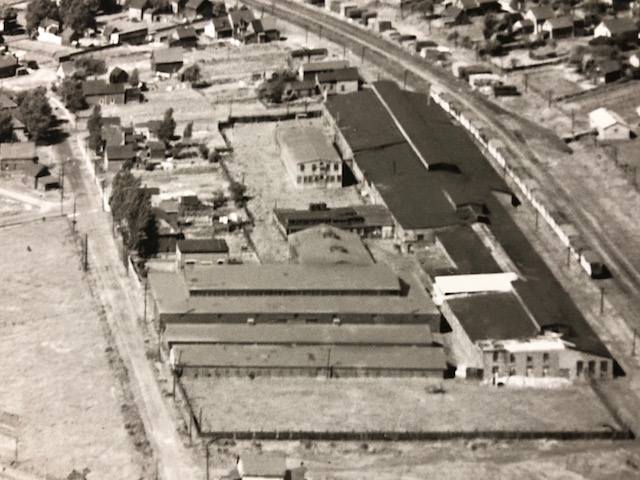
Monday August 7th We left the train at 8 a.m. and marched to the Intercolonial Pier where we embarked on the Anchor Liner Cameronia, we left the pier at 4 P.M. and anchored out in the harbour.
Tuesday Aug 8th Still at anchor in the harbour at 9 a.m. the metegama [sic] came in and went [illegible] the pier for the 121st of Vancouver and the 123rd when she had got them on board she came up alongside us, also the Scotian and the Sandanavian [sic] all of them filled with troops.
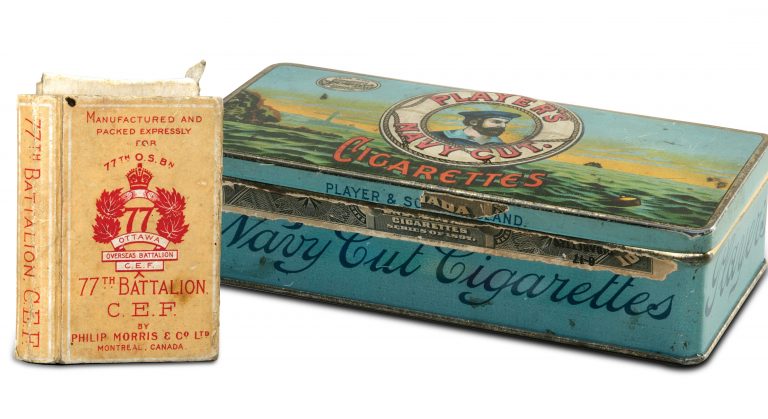
Wednesday Aug 9th We left Halifax at 8 a.m. in the following order Scotian, Scandanavian, Metagama and Cameronia. We had to go last as our was the fastest boat, we had to take the speed from the Scotian as she was the slowest. The H.M.S. Drake passed us to lead the four transports as she was passing, her Captain called thru a megaphone for three cheers for the Canadians. Passing out of the harbour we had to go thru a small gap as it is guarded by steel nets and a large gun mounted on a barge as a protection against submarines. We lost sight of land at 1 p.m. at 2.30 we lined up for Cigarettes that had been given by the Ladies Comfort League of Toronto, 4 packets of Players to each man.
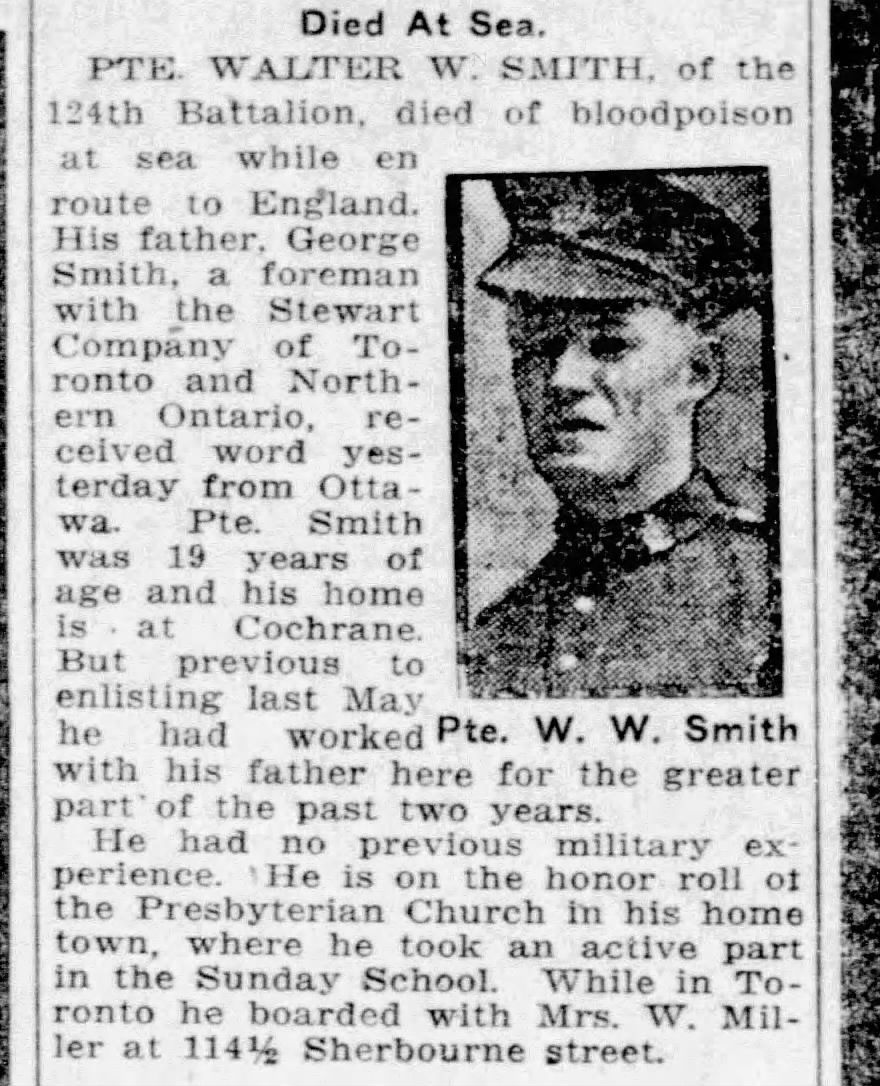
Thursday August 10th at 10 a.m. we were shown which lifeboats we had to go to in case of accidents, we also had to parade with life belts on so as to get use to them. At 4.30 one of D Company men died of blood poison, he cut a boil on his face while shaving on Monday.[vii]
Monday Aug 14th Very foggy in the morning in the afternoon we got measured for our new uniforms.
Tuesday Aug 15th We saw a whale about 500 yards off the boat, and a school of porpoises. In the afternoon we passed two sailing vessels.
Wednesday Aug. 16th Another foggy day and raining. We had another issue of cigarettes, bringing it up to a total of 120 Cigarettes each man had since we came on board.
Thursday Aug 17th. Things are beginning to get exciting we have to wear our life belts wherever we go, even have to wear them when we are eating we all sleep up on deck to-night they had mounted eight machine guns up on the top deck, and are practicing firing at boxes.
The diary ends on 17 August 1916 and Private Berry’s service record records that he arrived, along with this battalion at Liverpool, England on 18 August 1916.
As it cannot be known why the final day’s entry is missing the notation on the last entry of the soldier firing at boxes, presumably thrown overboard, is a unique entry to this author. This is an interesting exercise and would have been quite popular with the men.
An interesting exclusion from the brief diary is any mention of food, being a consuming topic of conversation of soldiers since time immemorial. One can suppose the food was good enough not to need mention but not bad or superior requiring mention in the diary.
As a native Briton born at Bury, Lancashire, England one wonders of he felt the tug of his former homeland at all. Suffice to say it was not stronger than his need to return to his wife and child.
He would serve in England from that date until 11 October 1916 when he was transferred to the 18th Battalion. He served with service battalions from that date until he arrived “in the field” with the 18th Battalion on 27 March 1917.
He was reported wounded on 9 April 1917 and then that report was rescinded, because he was sick. He appears to have returned to the 18th Battalion by 30 May 1917 and is attached to the 4th Canadian Trench Mortar Battery on 28 July 1917 and is wounded lest than a month later (GSW mouth) which requires treatment in England.
As luck would have it, he would be reunited with the 18th Battalion for the return home aboard the SS Caronia and be discharged due to demobilization on 25 March 1919 at Toronto, Ontario.
With all his adventures and experiences, one wonders what he felt and thought during his return home. Did he see some whales or porpoises during his return home? Was he expectant and excited to return home to new opportunities found, and hopefully abundant with the new peace?
Those thought are lost to time…
The future would offer two sons, that we know of, being born to this man and he was part of their lives until, and he passed away in Toronto on 11 October 1956 and found final peace at Mount Pleasant Cemetery in that Toronto.
[i] Private Ernest Berry, reg. no. 769938.
[ii] PARTICULARS OF FAMILY OF AN OFFICER OR MAN ENLISTED IN THE C.E.F. This form outlined the relatives and family members currently alive at the time of completion.
[iii] Elsie Marion Berry (nee Walton). Born 6 March 1896, England. Died 19 February 1981, North York, Ontario.
[iv] This would be by rail.
[v] 123rd Battalion was formed in Toronto. This notation is of interest as Berry writes that this battalion had been at Amherst for a week. This, for the author, is unusual. Most troop movements to Halifax travelled successive days with short stops for food, fuel, and exercised. It is unknown why the 123rd, or element of this unit was delayed. The 123rd Battalion was part of the convoy that Berry was in and left Halifax on the same day (9 August 1916). There is a reference that a portion of the 123rd went to England aboard the SS Cameronia with the follow up group sailing on 9 August aboard the SS Metagama.
[vi] A search of the Toronto Star Weekly makes one mention of the 124th Battalion on 19 August 1916 regarding the sentencing of Private H.S. Bale of that battalion to 3 months hard labour for absence without leave. This soldier had enlisted first with the 75th Battalion and discharged as he was considered to not be able to become an efficient soldier. He joined the 124th and obviously his commitment was wanting. He was released from service for medical reasons as he suffered from epsilepsy. There is no mention of this battalion being overseas until October. Sadly, there is no access to this paper’s content for September 1916. The first mention of the 124th being overseas is on the Toronto Star relating the death at sea of Private Walter W. Smith. It does not relate the specific details until an article published on the
[vii] This was Private Walter William Smith, reg. no. 769109. He was buried at sea, which was a common practice and is commemorated at the Hollybrook Memorial at Hollybrook Cemetery, Southampton, England. He is referring to Monday 7 August 1916.
Discover more from History of the 18th Battalion CEF, "The Fighting Eighteenth"
Subscribe to get the latest posts sent to your email.
 History of the 18th Battalion CEF, "The Fighting Eighteenth"
Leave a comment